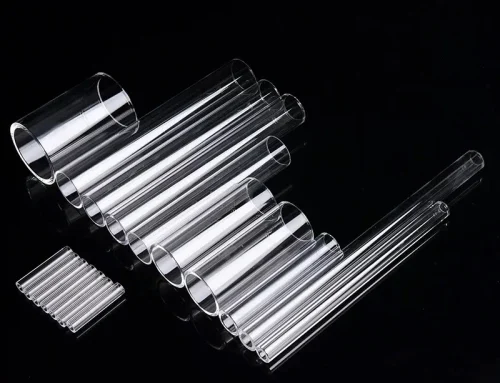
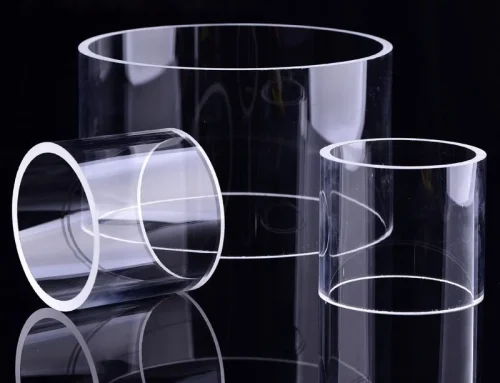
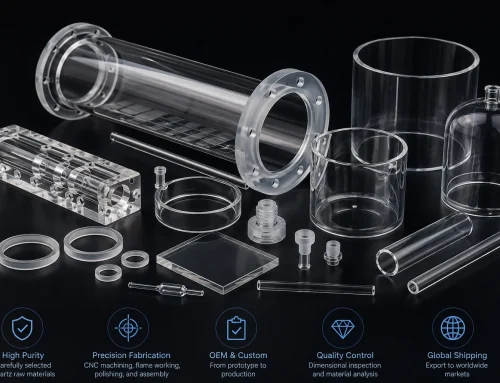
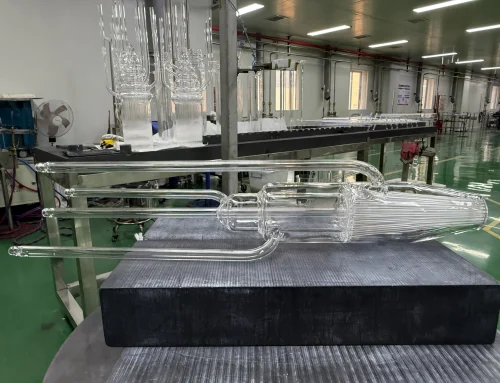
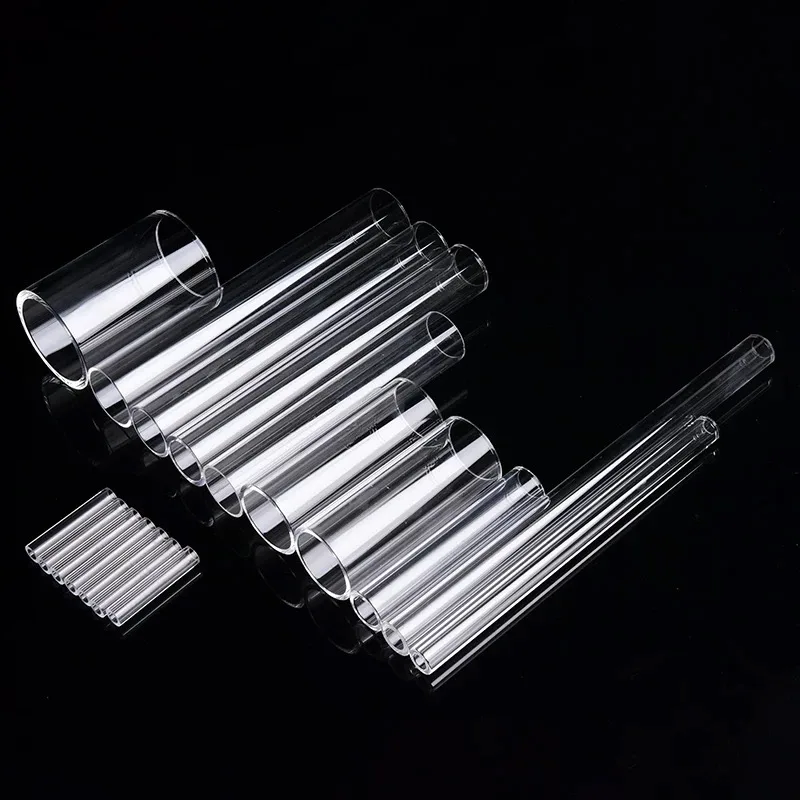
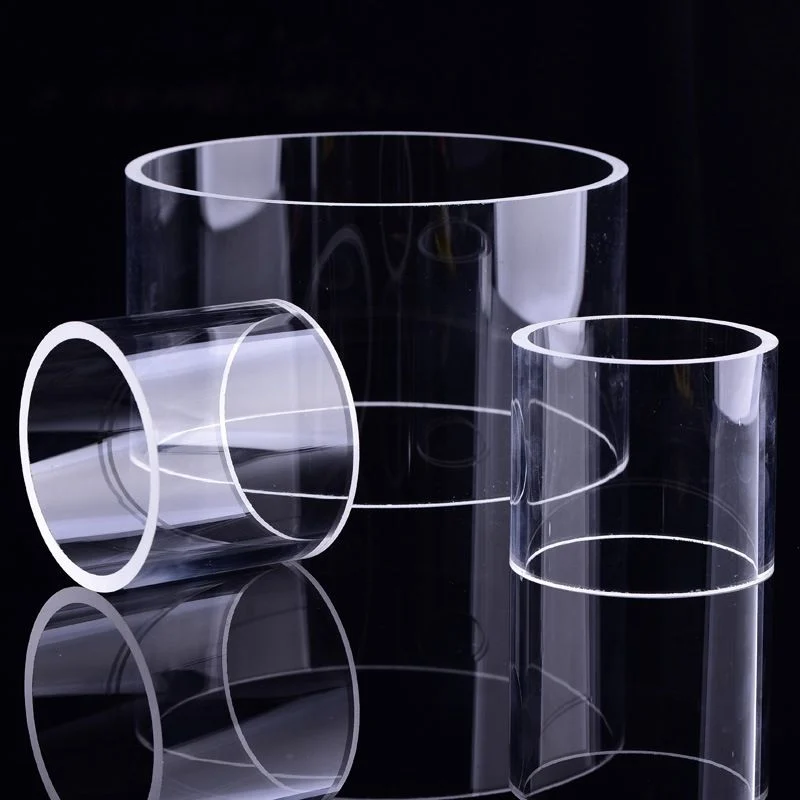
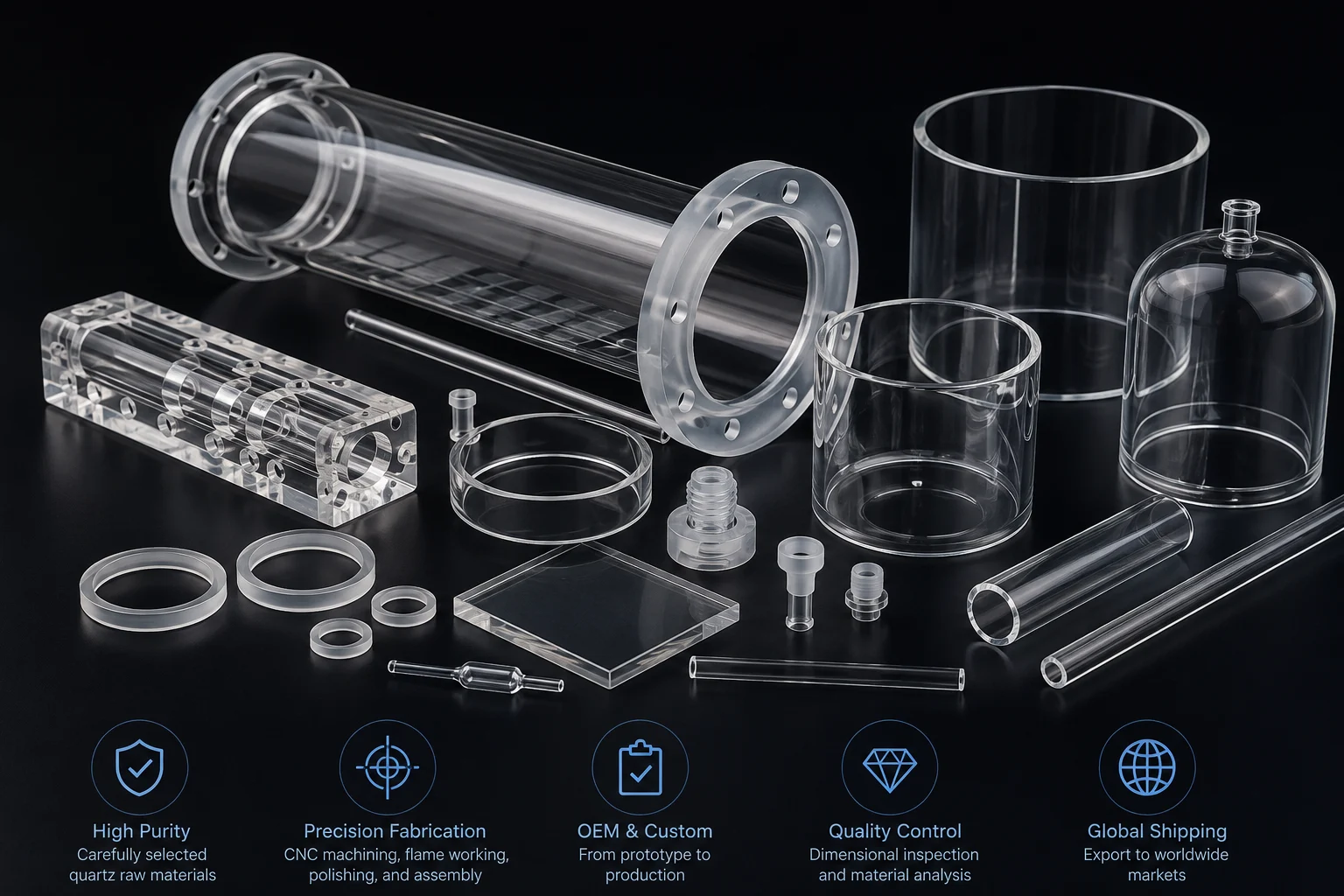
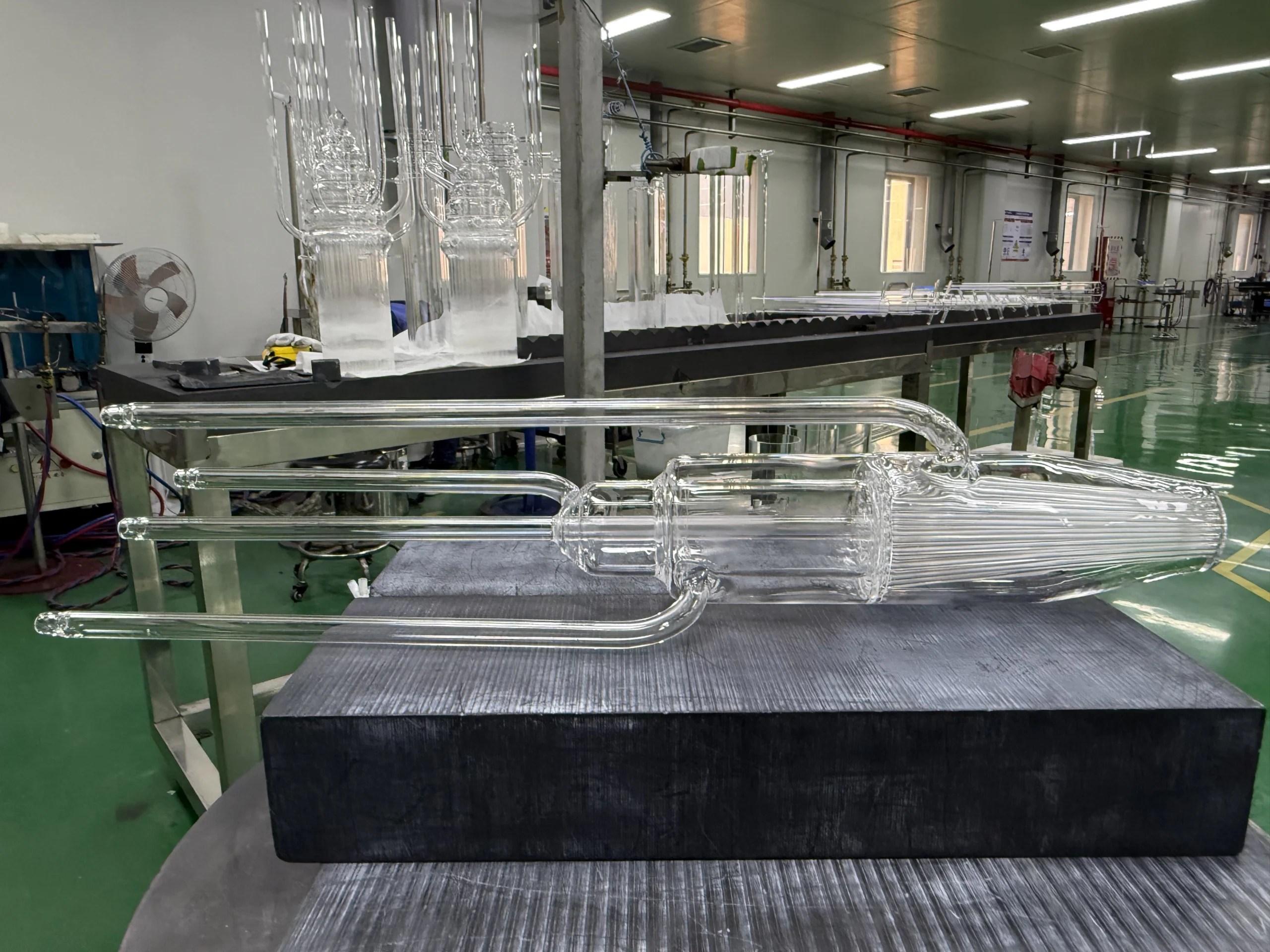
Not every quartz tube is meant to be seen through. The milky-white, light-scattering grade — the opaque quartz tube — is built to do the opposite of clear tubing: instead of letting light pass, it spreads heat evenly and screens glare. In radiant heaters, furnaces and high-temperature equipment, that diffuse behaviour often outperforms transparent tubing. This guide explains in depth how an opaque tube works, why the milkiness is engineered on purpose, how it is made, how it behaves with heat and light, where it belongs, how it compares with other materials, and how to specify, judge and maintain it.
The Material Behind the Milkiness
An opaque quartz tube starts from the same high-purity fused silica as clear tubing — the difference is structural, not chemical. Fused silica is almost pure silicon dioxide with a rigid, randomly bonded atomic network and no crystalline grain boundaries. That network is what gives quartz its defining strengths: a high softening point, very low thermal expansion, strong thermal-shock resistance and chemical inertness to nearly everything except hydrofluoric acid.
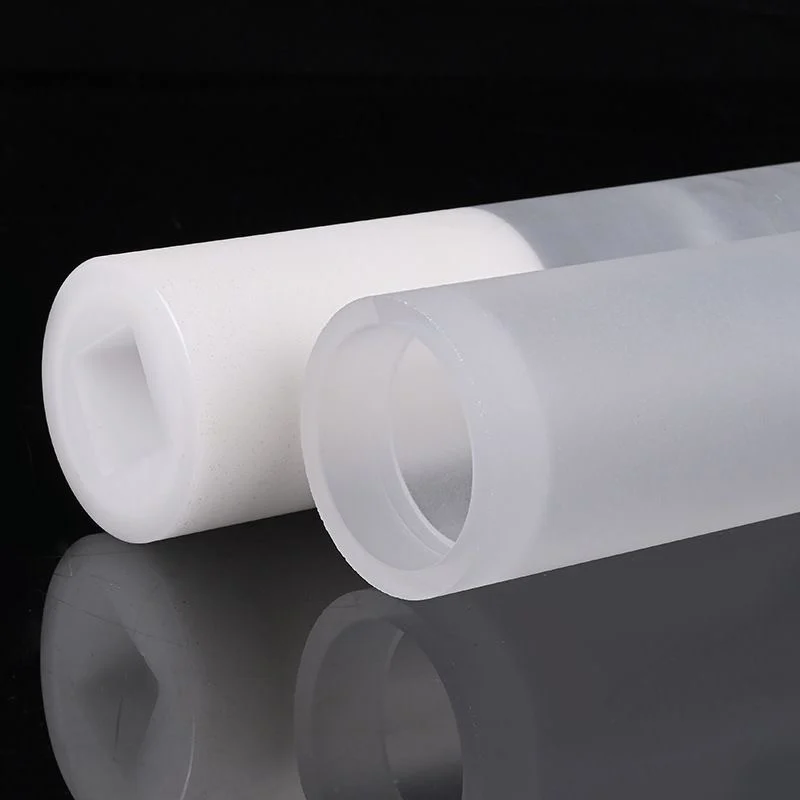
Clear quartz is processed so the wall is essentially free of bubbles, letting light pass straight through. An opaque, or milky, quartz tube instead contains a controlled population of microscopic bubbles distributed through the wall. Those tiny voids scatter light in every direction rather than transmitting it, which is exactly why the tube looks white. Crucially, the underlying material is unchanged — you keep the full mechanical and thermal performance of quartz and simply add light-scattering behaviour on top.
How the Bubble Structure Controls Performance
The bubbles in an opaque tube are not random voids — their size, density and distribution are controlled during manufacture, and together they decide how the tube performs. A higher bubble density scatters more strongly, giving a whiter wall and more complete diffusion of light and radiant heat. A lower density lets the tube sit between fully clear and fully opaque, useful where some translucency is wanted.
Uniformity is just as important as density. A well-made opaque tube scatters consistently from end to end, with no clear streaks or thin patches that would let heat or glare leak through unevenly. That consistency is what allows an opaque tube to deliver a smooth, even output across its whole length — the property most radiant-heat designs are actually buying.
How Opaque Quartz Tubing Is Manufactured
Opaque tubing begins as high-purity silica raw material, the same starting point as clear quartz. During fusion and forming, the process deliberately keeps fine gas bubbles in the melt rather than refining them out. As the tube takes shape, those bubbles lock into the wall. They create the scattering structure that defines an opaque grade.
We then size the tube to the required outer diameter and wall thickness, cut it to length, and finish it as the application needs — fire-polished ends, flame-formed flanges, sealed or domed ends, or ground faces for sealing. The bubbles sit inside the wall, not on the surface. So the outside of a quality opaque tube stays smooth and clean to handle. This matters for mounting and for keeping the surface free of contamination.
How an Opaque Tube Behaves with Heat and Light
Even Heat, No Hot Spots
A clear tube transmits radiant heat in straight lines, which can create hot spots on the target. The scattering wall of opaque tubing spreads thermal radiation so the heat leaving it is far more uniform — the whole point of diffuse-heat quartz tubing in a heater. The result is a smoother temperature profile across the work, fewer localised peaks, and more repeatable, controllable heating.
Glare Screening
A bright element inside a clear tube throws harsh, direct glare. An opaque wall softens and diffuses that output, making the work zone easier and safer to be near while still delivering full heat. In staffed production areas, that reduction in visible glare is a real ergonomic and safety benefit, not just a cosmetic one.
Energy Reflected Inward
The bubbles scatter light rather than transmit it. So a portion of radiant energy reflects back inward instead of escaping. In a heater assembly this can improve efficiency, directing more energy toward the work. Over a long duty cycle, that retained energy can mean lower power draw for the same delivered heat.
Thermal Protection for the Element
The opaque wall also acts as a physical and thermal shield around the heating element or the work inside. It guards against drafts, splashes and accidental contact while still radiating heat outward, and it keeps a glowing element from being directly exposed — a combination that helps extend element life in demanding environments.
So the milky look is not a defect or contamination — it is a deliberately engineered optical property suited to radiant-heat work.
Thermal Performance and Working Range
An opaque quartz tube keeps the full thermal credentials of fused silica. It stays dimensionally stable and rigid to roughly 1200 °C in continuous service, with short excursions higher. It only begins to soften near 1600 °C. Its very low thermal expansion means it barely changes size as it heats. So it holds tolerances and resists sagging across the working range.
That same low expansion gives strong thermal-shock resistance: the tube can take rapid heating and cooling — even repeated cycling — that would crack materials with higher expansion. For radiant heaters that switch on and off, and for furnaces that ramp constantly, this endurance is what delivers a long, reliable service life rather than early failure.
Opaque vs. Clear Quartz Tubing
The choice between the two grades comes down to a single question: do you need light to pass through, or heat to spread out? Choose clear fused quartz tubing when transmission or visibility matters — UV lamps, optical paths, sight glasses and processes an operator needs to watch. Choose an opaque tube when you want diffuse, even heat and glare control rather than a view.
Neither grade is “better” in the abstract — they are tuned for opposite jobs. Many real systems use both: a clear tube where light must escape, and an opaque tube nearby where uniform heat is the goal. Matching each tube to its role, rather than defaulting to clear everywhere, is what makes a heating system both efficient and comfortable to run.
How Opaque Quartz Compares with Ceramic and Metal
Opaque quartz is often weighed against ceramic tubes or metal sheaths for radiant-heat duty. Against ceramics, quartz offers far better thermal-shock resistance — it tolerates fast heating and cooling that can crack many ceramics — along with high chemical purity and a smooth, easily cleaned surface. Against metals, quartz does not corrode or oxidise, stays dimensionally stable, and will not contaminate sensitive processes with metal ions.
The trade-off is mechanical: quartz is harder and more brittle than metal, so it must be supported and protected from impact and bending. Where clean, even, corrosion-free radiant heat is the priority — and where contamination or oxidation would be a problem — opaque fused silica is usually the stronger choice.
Where Opaque Fused Silica Tubing Belongs
Infrared & Radiant Heaters
The classic home for diffuse-heat tubing. The opaque wall houses the element and spreads its output evenly across the target, instead of a striped or spotty heat pattern. This makes it a staple in industrial drying, curing, heating and process ovens, where even surface temperature is what determines product quality.
Furnace Liners & Protection Tubes
Opaque tubing shields the work and the chamber, distributes heat around the load, and tolerates rapid cycling without cracking thanks to quartz’s low expansion. It is widely used as a liner or protection tube in thermal-processing furnaces, where it both protects and helps even out the heat reaching the load.
Glare-Sensitive Work Zones
Where an operator stands close to a hot element, an opaque tube cuts direct glare while still radiating heat — a comfort-and-safety gain clear tubing cannot offer. This matters on staffed lines, in inspection areas and in enclosed workspaces where a bright exposed element would be a hazard or a distraction.
Specialty Lighting & Heating
Some lamp and heater designs deliberately want a softened, diffuse output rather than a sharp bright source, and a bubbled quartz tube delivers exactly that — soft, even emission without a harsh point of brightness, while keeping the high-temperature durability of quartz.
Sizing and Structural Design
An opaque tube is usually built to a specific assembly, so its geometry is as important as its grade. Outer diameter and wall thickness set both how the tube fits its mount and how it behaves under thermal stress — thicker walls are more robust but build more internal stress under rapid shock, so wall thickness is a balance rather than simply “thicker is better.”
Length, straightness and end form complete the picture. Tubes can be supplied with open ends, sealed or domed ends, flanges, or ground faces for sealing, and twin-bore or single-bore formats are common for heater elements. Getting these details right means the tube drops into the equipment cleanly and is supported properly along its length, which protects it from the bending and point loads that brittle materials dislike.
How to Judge Opaque Quartz Quality
Not all opaque tubing is equal, and a few signs separate good material from poor. The whiteness should be uniform along the tube, without clear streaks, thin spots or patchy zones that would scatter unevenly. The outer surface should be smooth and clean, free of cracks, chips and surface contamination. End finishing — flanges, sealed ends, polished faces — should be even and true so the tube seats and seals properly.
Material purity underpins all of this: a reputable opaque grade is made from high-purity silica so that, despite the bubbles, it resists early devitrification and holds up over many heating cycles. Asking about purity grade and seeing consistent, even opacity is the simplest way to gauge quality before committing to a supply.
What Stays the Same — and What to Specify
Going opaque does not cost you the fundamentals. The tube still offers high-temperature stability, thermal-shock resistance, chemical inertness and the option of custom diameters, wall thicknesses, lengths and end finishing — just like clear tubing.
When you order, pin down your operating temperature and how long it is held, how aggressively you thermal-cycle, the diameter and wall thickness the heater or furnace needs, the end forms for mounting and sealing, and any mounting or support constraints. The grade is best confirmed against the application so the tube matches what the job actually demands rather than being over- or under-specified.
Handling, Maintenance & Service Life
Opaque quartz tubing rewards clean handling. Keep the surface free of grease and fingerprints, since surface contamination can encourage devitrification — a slow surface crystallisation that, at sustained high temperature, makes the wall cloudier and more brittle. Wipe with a clean, lint-free cloth and avoid touching hot zones with bare hands.
Mechanically, support the tube along its length and avoid point loads, impacts and bending. Treating roughly 1200 °C as the comfortable continuous range and reserving higher temperatures for short excursions keeps devitrification in check. Within those bounds, and with clean handling, a quality opaque tube delivers a long, repeatable service life. Inspect periodically for cloudiness, cracks or chips at the ends, which are the usual first signs of wear.
Sourcing Opaque & Clear Quartz Tubing
FGQuartz manufactures opaque and clear fused quartz tubing from high-purity silica at our works in Lianyungang, China, shipped worldwide. Whether you need diffuse-heat tubing for a heater, an opaque furnace liner or a clear tube for an optical path, we match the right grade, geometry and finish to your application — from prototypes to production. Explore the full quartz glass tube range, the related high-temperature quartz application page, or request a quote with your operating conditions.