If you have shopped for quartz glass, you have seen both terms — fused silica and fused quartz — used almost interchangeably, sometimes on the same page. They are closely related, and for many jobs the difference does not matter. But for demanding optical, UV and semiconductor work, the distinction is real and worth understanding. This guide explains what each term means, where they differ, and how to know which one your application needs.
The Short Answer
Both fused silica and fused quartz are glass made almost entirely of silicon dioxide, formed by melting a silica source and cooling it without letting it crystallise. The difference is the raw material and how it is melted, which in turn changes the purity and the optical performance — especially in the ultraviolet. “Fused quartz” generally starts from natural quartz; “fused silica” usually refers to a higher-purity synthetic material. Everything else follows from that one distinction.
Fused Quartz: Melted from Natural Quartz
Fused quartz is made by melting natural quartz crystal or high-purity quartz sand. Because the starting material comes from the ground, it carries trace metallic impurities and a certain level of hydroxyl (OH) content, even after careful processing.
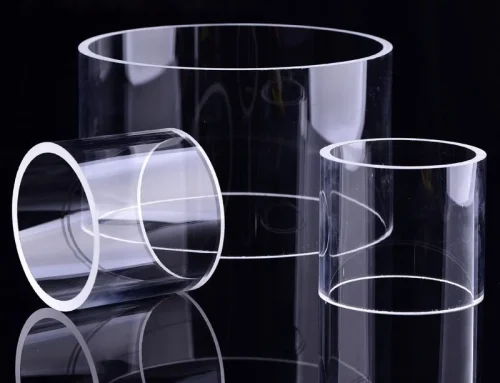
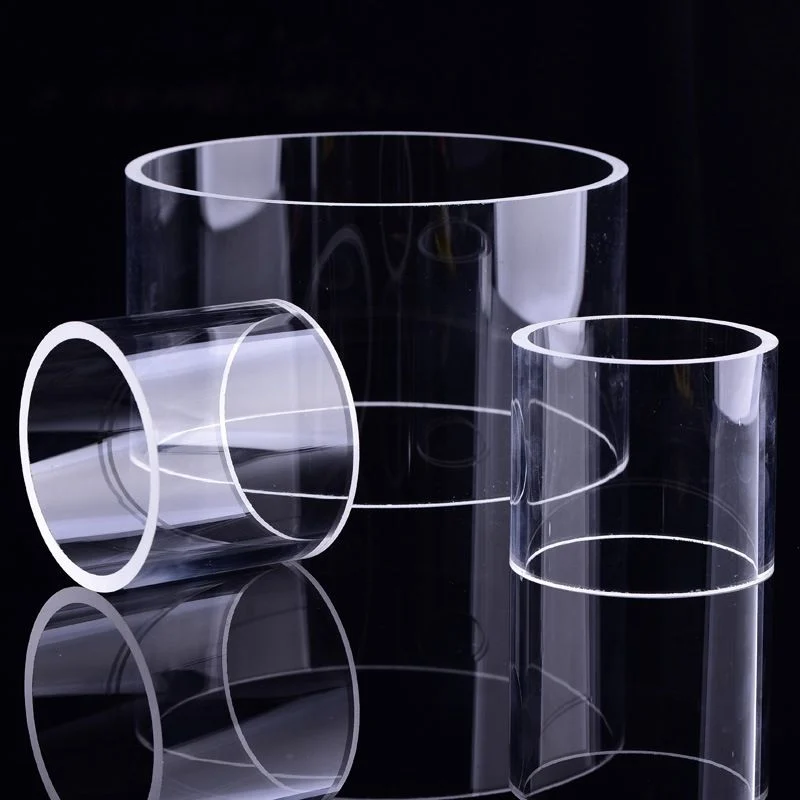
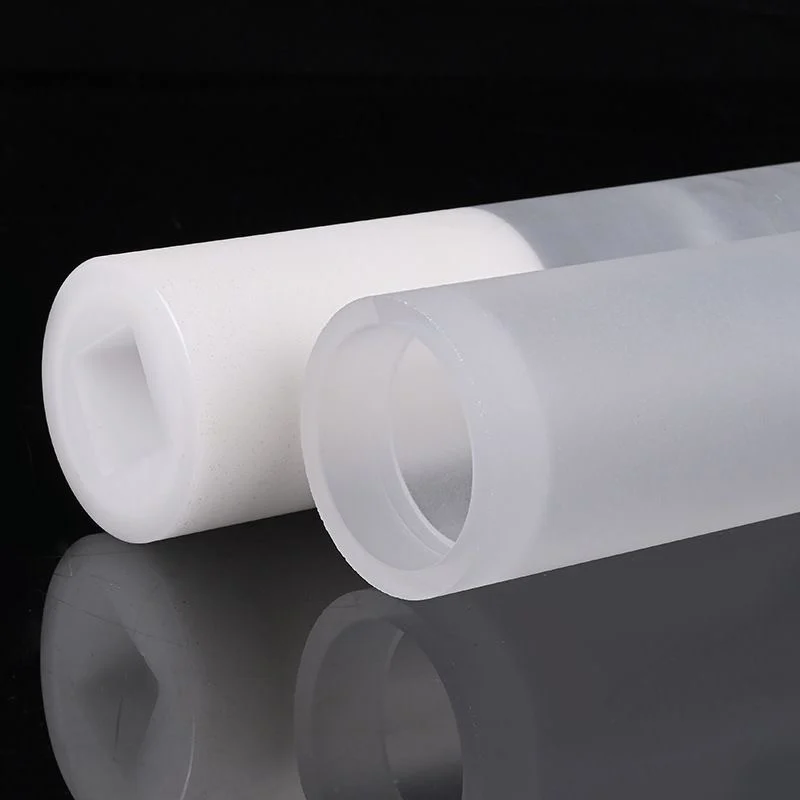
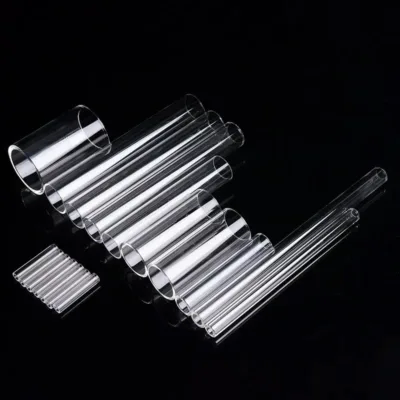
This does not make it inferior — fused quartz has excellent thermal stability, chemical resistance and mechanical strength, and it serves the large majority of industrial uses perfectly well. Tubes, rods, crucibles and labware for heating, furnaces and general high-temperature work are typically fused quartz, and it is the more economical choice.
Fused Silica: Synthetic and Higher Purity
Fused silica, in the strict sense, is made synthetically — typically from a silicon-containing chemical that is converted to silicon dioxide. Because it is built from a pure chemical source rather than mined crystal, it contains far fewer metallic impurities.
That higher purity gives synthetic fused silica better optical homogeneity and, crucially, much better transmission in the deep ultraviolet. It is the material of choice for UV optics, laser components, lithography and any application where light has to pass through the glass with minimal loss or where contamination cannot be tolerated.
Where the Difference Actually Matters
UV Transmission
This is the biggest practical difference. Synthetic fused silica transmits deeper into the ultraviolet than natural fused quartz, because it has fewer absorbing impurities. For germicidal, deep-UV and laser work, the synthetic grade is often required; for visible-light and thermal work, natural fused quartz is fine.
Purity and Contamination
In semiconductor processing, trace metals migrating from the glass can ruin a wafer. The higher purity of synthetic fused silica matters there. For general heating and furnace work, the purity of natural fused quartz is more than adequate.
Optical Homogeneity
Synthetic fused silica is more uniform internally, with fewer bubbles and striae, which matters for precision lenses, windows and prisms. For a furnace tube or a crucible, this uniformity is not needed.
Cost
Natural fused quartz is less expensive and entirely suitable for most industrial jobs. Synthetic fused silica costs more and is reserved for the optical, UV and high-purity applications that genuinely need it.
What They Share
For all their differences, both materials share the core properties that make quartz glass valuable. Both stay stable to around 1200 °C in continuous use and only soften near 1600 °C. Both have very low thermal expansion, so they resist thermal shock and hold their shape through rapid temperature changes. Both are chemically inert to nearly everything except hydrofluoric acid. In other words, for thermal and chemical performance the two are very similar — the gap opens up mainly in optical and purity demands.
A Note on Terminology
In everyday industry use, the two terms are often blurred. Some suppliers call all of it “fused quartz”; others call all of it “fused silica.” Because the words alone are not a reliable guarantee of grade, the safe approach is to specify by performance — the purity level, the UV transmission, or the application — rather than relying on the name. A good supplier will tell you exactly which grade you are getting and what it guarantees.
Which One Do You Need?
The choice comes down to the job. Choose natural fused quartz for furnace tubes, crucibles, heating elements, labware and general high-temperature industrial work — it delivers the thermal and chemical performance at a lower cost. Choose synthetic fused silica for UV optics, laser systems, deep-UV transmission, lithography and semiconductor processing where purity and optical clarity are critical. When in doubt, describe your application and let the supplier match the grade.
Get the Right Grade for Your Application
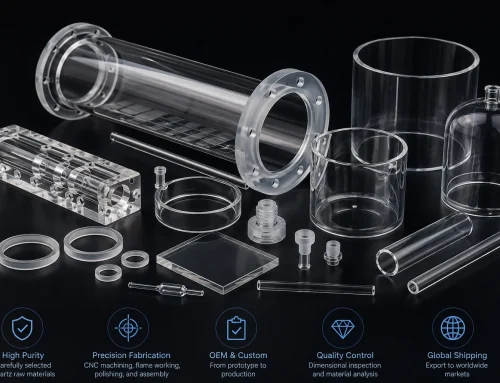
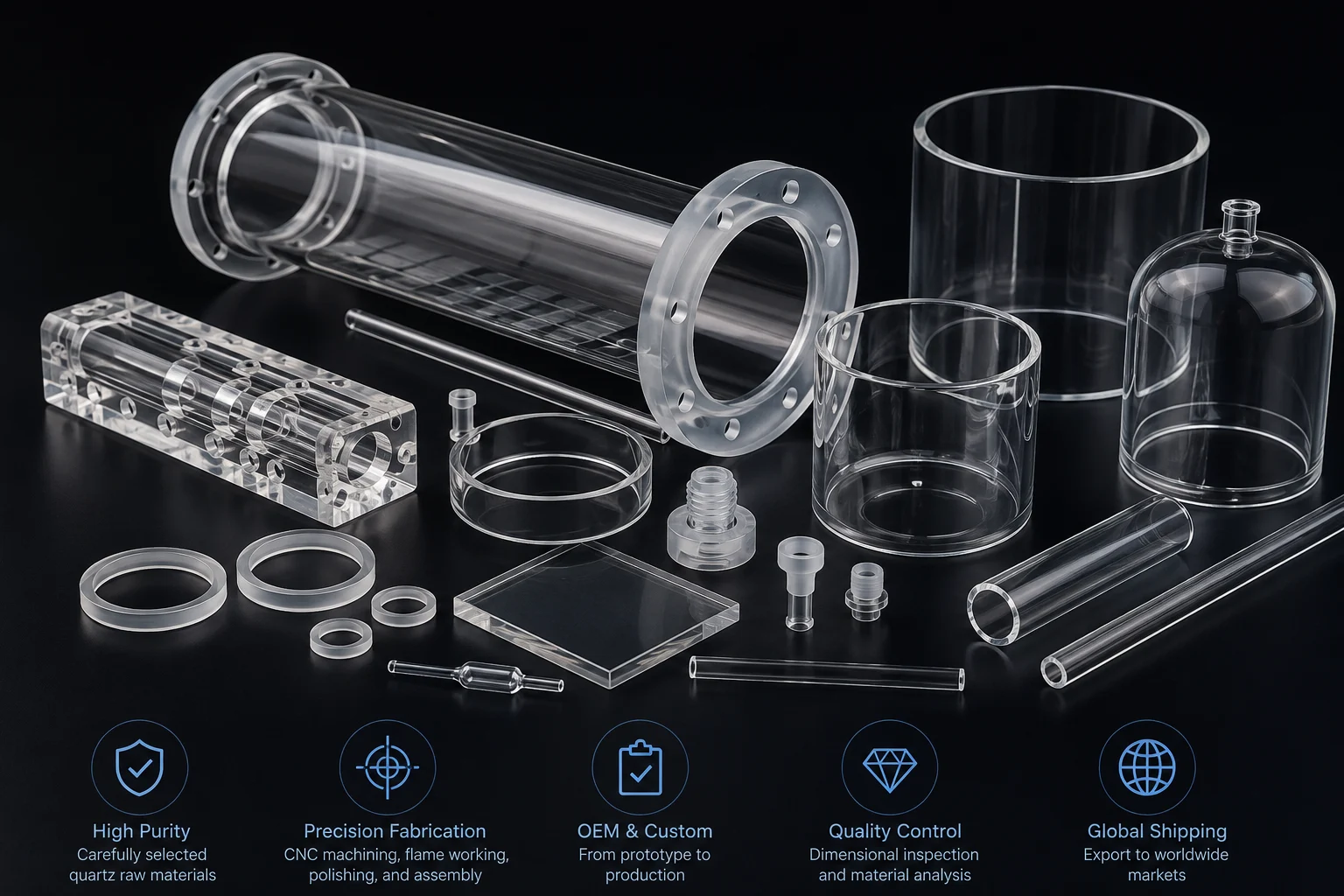
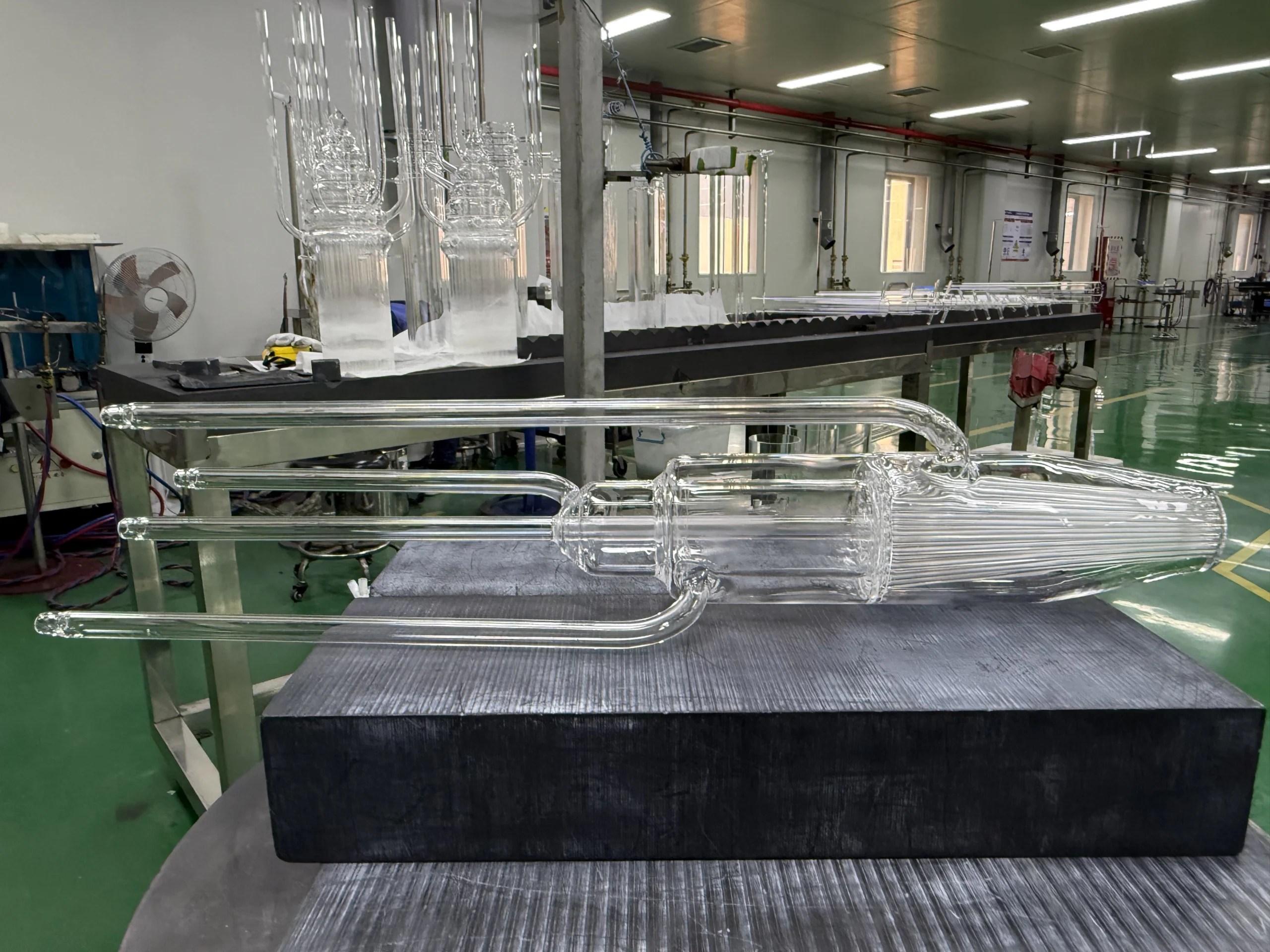
FGQuartz manufactures both fused quartz and high-purity fused silica components — tubes, rods, plates, crucibles and custom parts — from our works in Lianyungang, China, shipped worldwide. Tell us your application and we will match the right grade, geometry and finish, from a single prototype to production. Explore the full quartz glass product range, review our material specifications, or request a quote with your requirements.