High-Temperature Quartz: A Complete Guide to Infrared Heaters, Furnace Tubes & Sight Glasses
Long before quartz reaches a semiconductor fab or an optics bench, it does the unglamorous heavy lifting of industrial heat — glowing inside infrared heater tubes, carrying samples through furnace tubes, shielding thermocouples in furnaces, and letting operators see into red-hot process zones. This guide explains why fused silica thrives where most materials fail, and how to specify it for high-temperature work.
Take a material that shrugs off being heated red-hot and then quenched in cold air without cracking, that lets infrared heat pass straight through it, and that stays chemically quiet in a furnace atmosphere — and you have described fused silica. That combination is why quartz is the default material for a whole layer of industrial high-temperature hardware that rarely gets noticed but is everywhere heat is applied.
High-temperature quartz products — infrared heater tubes, furnace and muffle tubes, thermocouple protection sheaths, sight glasses and bell jars — work in industrial heating, heat treatment, materials processing and thermal analysis. They are chosen for an unusual mix of properties: continuous operation at high temperature, near-immunity to thermal shock, high infrared transmittance and chemical inertness.
This guide covers the whole picture: why fused silica behaves the way it does at high temperature, the full family of high-temperature quartz hardware, how each type works in a heating system, the specifications that matter, and the honest limits — chiefly devitrification — that decide service life.
This guide covers industrial and thermal-processing high-temperature quartz — infrared heaters, furnace and muffle tubes, thermocouple sheaths, sight glasses and bell jars. The high-temperature quartz used specifically in chip making and crystal growth is covered in our semiconductor and solar resources; this guide focuses on general industrial heating and materials processing.
01 — Why Fused Silica Thrives at High Temperature
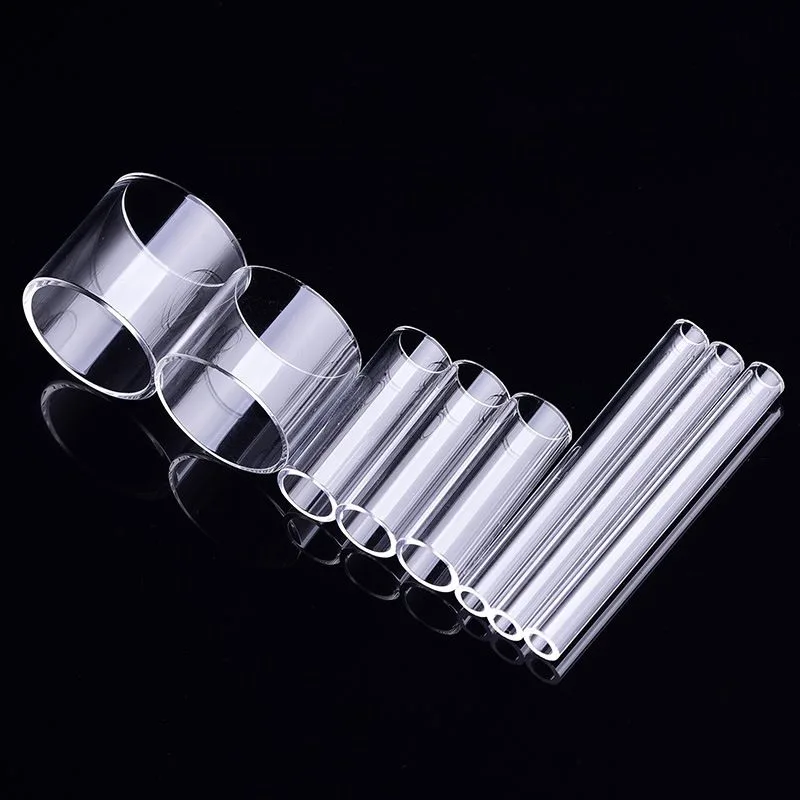
Four properties, working together, make fused silica the material of choice for high-temperature hardware:
- High continuous-use temperature. Fused silica operates continuously at temperatures far beyond borosilicate glass and most polymers, covering the bulk of industrial heating and heat-treatment work.
- Outstanding thermal-shock resistance. Its very low thermal expansion means it can be heated and cooled rapidly — even quenched — without the cracking that destroys ordinary glass and many ceramics. This is often the single deciding property.
- High infrared transmittance. Quartz passes infrared radiation efficiently, which is exactly what an infrared heater needs: the tube protects and shapes the element while letting its radiant heat reach the target.
- Chemical inertness and cleanliness. It stays unreactive in most furnace atmospheres and does not shed contamination, which matters in clean heat-treatment and materials processing.
The honest limit: devitrification, not melting
The most important thing to understand about high-temperature quartz is that its practical ceiling is set by devitrification, well below the point where it actually softens. Held for long periods at high temperature — and especially if its surface is contaminated with alkali, most commonly sodium from fingerprints or dust — fused silica slowly crystallises into cristobalite. The surface turns milky white, becomes brittle, and tends to crack on the next cool-down. Above roughly the upper end of its continuous-use range this happens faster.
This is why two things matter enormously in service: respecting the continuous-use temperature rather than chasing the softening point, and keeping the quartz clean and handled with gloves. A part run too hot, or installed with greasy fingerprints, devitrifies and fails far sooner than the same part treated correctly.
How it compares to the alternatives
Borosilicate glass is cheaper but tops out far lower and cannot take the thermal shock. Technical ceramics such as alumina reach higher continuous temperatures than quartz, but they are opaque (no radiant transparency, no visibility), far more sensitive to thermal shock, and heavier and harder to form. Metals oxidise, can contaminate the process and are opaque. Fused silica occupies the niche where you need high temperature plus thermal-shock survival, infrared transparency, or cleanliness up to its devitrification limit — and above that limit, ceramics take over.
Choose quartz when you need radiant (infrared) heating, rapid thermal cycling, visibility into the hot zone, or clean high-temperature processing within its continuous-use range. Move to ceramics only when the continuous temperature genuinely exceeds what quartz can sustain — and accept the loss of transparency and shock resistance that comes with them.
02 — The Family of High-Temperature Quartz Hardware
High-temperature quartz appears in industrial heating and processing in several recurring forms. Here is the core family and what each one does.
| Product | What it does | Typical setting |
|---|---|---|
| Infrared heater tubes | House and protect the heating element while transmitting its infrared radiation to the target | Industrial drying, curing, heating; rapid thermal processing |
| Furnace & muffle tubes | Contain the workpiece and atmosphere inside an externally heated tube furnace | Heat treatment, sintering, brazing, materials processing |
| Thermocouple protection tubes | Shield a thermocouple from the hot, sometimes corrosive process while allowing accurate reading | Furnaces, kilns, molten-process temperature measurement |
| Sight glasses / observation windows | Provide a clear, heat-resistant view into a hot process zone | Furnaces, boilers, combustion chambers, kilns |
| Bell jars & domes | Enclose a heated or vacuum process while resisting thermal stress | Vacuum furnaces, controlled-atmosphere processing |
| Liners, setters & diffusers | Protect chamber walls, support the load, and distribute gas in the hot zone | Industrial furnaces and heating systems |
The majority of this family is fabricated from fused silica tubing — sized, sealed, flanged or formed to suit the heater or furnace. FGQuartz supplies stock and custom quartz tubes, flat plate for sight glasses, and fully bespoke custom high-temperature assemblies built to your furnace drawing.
03 — How Each Type Works in a Heating System
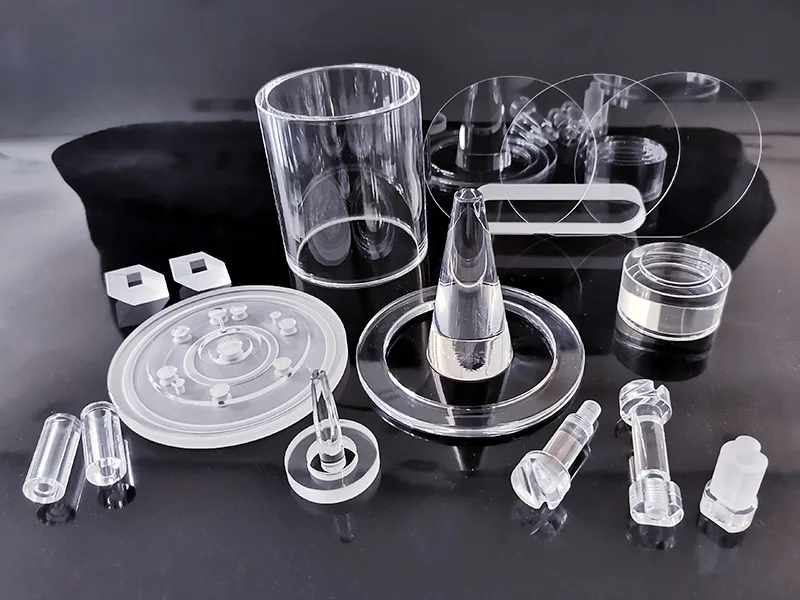
Infrared heating — radiant heat through the tube
In an infrared heater, a resistance filament sits inside a quartz tube. The quartz does two jobs at once: it protects and positions the element, and — because it transmits infrared so well — it lets the radiant heat pass straight through to the workpiece with little loss. The tube also withstands the rapid heat-up and cool-down of switching cycles without cracking. This is why fused silica, not glass or ceramic, is the standard envelope for infrared and short-wave radiant heaters used in drying, curing, plastics, food processing and rapid thermal applications.
Furnace & muffle tubes — the heated work chamber
In a tube furnace the work tube holds the sample and its atmosphere while heating elements surround it from outside. The quartz tube must stay dimensionally stable and resist sag at temperature, hold a gas seal at its ends, and survive repeated thermal cycling. Its transparency is a bonus — operators can often see the process inside. This is the same family used for laboratory tube-furnace work; for the research-scale end of it, see our laboratory quartz resources, and for the controlled high-purity version used in chip making, the semiconductor quartz glass resources.
Thermocouple protection tubes — keeping the sensor alive
A thermocouple measuring a hot or chemically aggressive environment needs a barrier that protects it without distorting the reading. A quartz protection tube does exactly that: it isolates the sensor from the atmosphere and any corrosive species, transmits heat quickly enough for an accurate and responsive reading, and resists thermal shock as the furnace cycles. Because measurement accuracy sets the temperature the whole process is controlled to, sheath integrity is more important than it looks.
Sight glasses — seeing into the heat
Sight glasses and observation windows give operators a clear view into furnaces, boilers and combustion chambers that would destroy ordinary glass. Fused silica works here because it stays transparent and structurally sound at temperature and tolerates the thermal gradient between a hot inner face and a cooler outer one. These are typically made from quartz plate sized and finished to the viewport, and where a pressure boundary is involved the thickness and mounting are specified to suit.
04 — The Specifications That Matter
High-temperature quartz is specified differently from optical or semiconductor quartz — the priorities are thermal and mechanical, not optical figure or trace purity. These are the parameters worth pinning down before you order.
| Specification | What it controls | Why it matters |
|---|---|---|
| Continuous-use temperature | The temperature the part can sustain long-term before devitrification dominates | Sets service life; the single most important rating to match to your process |
| Thermal-shock tolerance | How fast the part can be heated or cooled without cracking | Decides survival under fast cycling and quenching duty |
| Infrared transmittance | How efficiently the tube passes radiant heat | Determines heater efficiency in infrared and radiant applications |
| Wall uniformity & sag resistance | Even wall thickness and resistance to softening-creep at temperature | Keeps long tubes straight and dimensionally stable over their life |
| Surface cleanliness / low alkali | Freedom from the contamination that seeds devitrification | Slows surface crystallisation and extends working life |
| Dimensions & end finishing | Bore, length, flange, fire-polish or sealed ends | Determines fit, sealing and mounting in the heater or furnace |
The most common cause of premature failure is running quartz above its continuous-use temperature, or assuming a part rated for steady heat will survive aggressive cycling. Tell your supplier the peak temperature, the dwell time, and how fast you cycle — those three together, not a single “max temp” number, determine which grade and wall thickness you actually need.
05 — Quartz or Ceramic? Choosing for the Hot Zone
The recurring decision in high-temperature design is quartz versus technical ceramic. The deciding questions are simple. Do you need to transmit radiant heat or see into the zone? Quartz, because ceramics are opaque. Do you face rapid thermal cycling or quenching? Quartz, for its thermal-shock resistance. Is the continuous temperature within quartz’s working range? Then quartz wins on transparency, shock resistance, weight and ease of forming. Only when the continuous temperature genuinely exceeds what fused silica can sustain does ceramic become the right answer — and you accept opacity and shock-sensitivity as the trade.
Many real systems use both: a quartz infrared tube or sight glass where transparency and cycling matter, alongside ceramic insulation or elements where the temperature is highest. Specifying the right material for each location — rather than defaulting one material everywhere — is what makes a heating system both reliable and economical.
06 — Devitrification, Handling and Service Life
Devitrification is the clock on every high-temperature quartz part. The surface crystallises slowly with time at temperature, faster when hotter and faster still when contaminated. A devitrified part turns milky white, loses strength, and is prone to cracking on the next thermal cycle. Managing this is the core of getting long life out of high-temperature quartz.
Keep it clean. The biggest avoidable accelerant is alkali contamination — sodium from bare-handed handling or settled dust acts as a flux that seeds crystallisation. Install quartz with clean gloves, keep it free of dust and splashes, and never run it dirty.
Respect the temperature and support the part. Run within the continuous-use rating rather than at the peak the material can momentarily take, and support long tubes properly so they do not sag under their own weight at temperature.
When to replace. Retire a part when its surface goes cloudy or white over a meaningful area, when it has sagged or distorted out of fit, when cracks or chips appear (especially at flanges, seals or weld joints), or when an infrared tube’s output has visibly dropped as its surface degrades. Replacing on these signs prevents an in-service failure that can damage the surrounding equipment.
07 — Custom Hardware and Sourcing
High-temperature quartz is rarely an off-the-shelf purchase, because heaters and furnaces differ in size, mounting and atmosphere. A tube has to match a specific bore, length and end treatment; a sight glass has to fit a particular viewport and pressure boundary; a thermocouple sheath has to suit the sensor and the depth of immersion. So most orders involve some degree of fabrication — cutting, forming, flanging, sealing and fire-polishing fused silica tubing or plate to the application.
The practical implication for sourcing is that the supplier’s fabrication capability matters as much as the base material. The strongest results come from starting with the duty (temperature, cycling, atmosphere, fit) and letting the grade, wall thickness and end finishing follow from it. FGQuartz fabricates custom high-temperature quartz to drawing, alongside stock tubes and plate — part of our full application range.
08 — Where High-Temperature Quartz Is Going
1 · Electrification of industrial heat. As industry moves from gas-fired to electric heating for efficiency and emissions, infrared and radiant electric heaters — built around quartz tubes — are growing across drying, curing and process heating, lifting demand for high-quality infrared heater tubes.
2 · Faster, more precise thermal processing. Rapid thermal processing and tightly controlled heat-treatment recipes reward quartz’s thermal-shock resistance and clean radiant heating, pushing demand toward tubes that survive aggressive cycling without devitrifying early.
3 · Higher-purity furnace work. Advanced materials, battery and ceramic research is raising the cleanliness bar even for general furnace tubes, favouring low-alkali quartz that resists devitrification and does not contaminate sensitive processes.
4 · Larger and longer parts. Bigger heaters and longer furnace tubes demand fused silica that stays straight and sag-resistant at size — a real fabrication challenge that rewards suppliers who can hold geometry on large parts.
09 — Frequently Asked Questions
What is high-temperature quartz used for?
High-temperature quartz — fused silica hardware — is used across industrial heating and thermal processing: infrared heater tubes that house heating elements and transmit radiant heat, furnace and muffle tubes that contain a workpiece and its atmosphere, thermocouple protection sheaths, sight glasses for viewing into hot zones, and bell jars for vacuum and controlled-atmosphere furnaces. It is chosen for its high continuous-use temperature, outstanding thermal-shock resistance, high infrared transmittance and chemical inertness.
What temperature can quartz withstand?
Fused silica softens at a very high temperature, but its practical ceiling is set lower, by devitrification. Held for long periods near the top of its continuous-use range — especially if contaminated — the surface gradually crystallises and weakens. So quartz has a continuous-use temperature that should be treated as the working limit, well below the softening point. For continuous service above that range, technical ceramics such as alumina are used instead, giving up transparency and thermal-shock resistance in exchange for higher temperature capability.
Why does quartz turn white or cloudy after use at high temperature?
That milky-white appearance is devitrification — the surface crystallising into cristobalite after prolonged time at high temperature. It is accelerated by heat and, strongly, by alkali contamination such as sodium from bare-handed handling or dust. A devitrified surface is brittle and prone to cracking on cooling, so a part that has turned white over a meaningful area is near the end of its service life. Clean handling with gloves and staying within the continuous-use temperature both slow it down significantly.
Why is fused silica used for infrared heater tubes?
Because it transmits infrared radiation efficiently while protecting the heating element. In an infrared heater the filament sits inside the quartz tube; the quartz lets its radiant heat pass straight through to the workpiece with little loss, positions and protects the element, and survives the rapid heat-up and cool-down of switching without cracking thanks to its low thermal expansion. No common glass or opaque ceramic offers that combination of infrared transparency, thermal-shock resistance and high-temperature capability.
When should I choose quartz over a ceramic such as alumina?
Choose quartz when you need to transmit radiant heat or see into the hot zone, when the process involves rapid thermal cycling or quenching, or when the continuous temperature is within fused silica’s working range — situations where quartz’s transparency and thermal-shock resistance win. Choose a technical ceramic only when the continuous operating temperature genuinely exceeds what quartz can sustain, accepting that ceramics are opaque, more sensitive to thermal shock, and harder to form. Many systems use both, each where it fits best.
How do I get a long service life from high-temperature quartz?
Three things matter most: keep it clean (handle with gloves and avoid alkali contamination that seeds devitrification), run it within its continuous-use temperature rather than at the peak it can momentarily survive, and support long tubes properly so they do not sag at temperature. Then replace parts on the early warning signs — surface clouding, sag or distortion, cracks at flanges or seals, or dropping infrared output — rather than waiting for a failure that can damage the surrounding equipment.
Need High-Temperature Quartz for a Heater or Furnace?
FGQuartz makes fused silica infrared heater tubes, furnace and muffle tubes, thermocouple sheaths, sight glasses and custom high-temperature hardware from our works in Lianyungang, China, shipped worldwide. For the commercial range and request-a-quote details, see our high-temperature quartz application page, browse quartz tubes and quartz plate, request custom quartz hardware, or view our full product range and application library.