Quartz Crucible
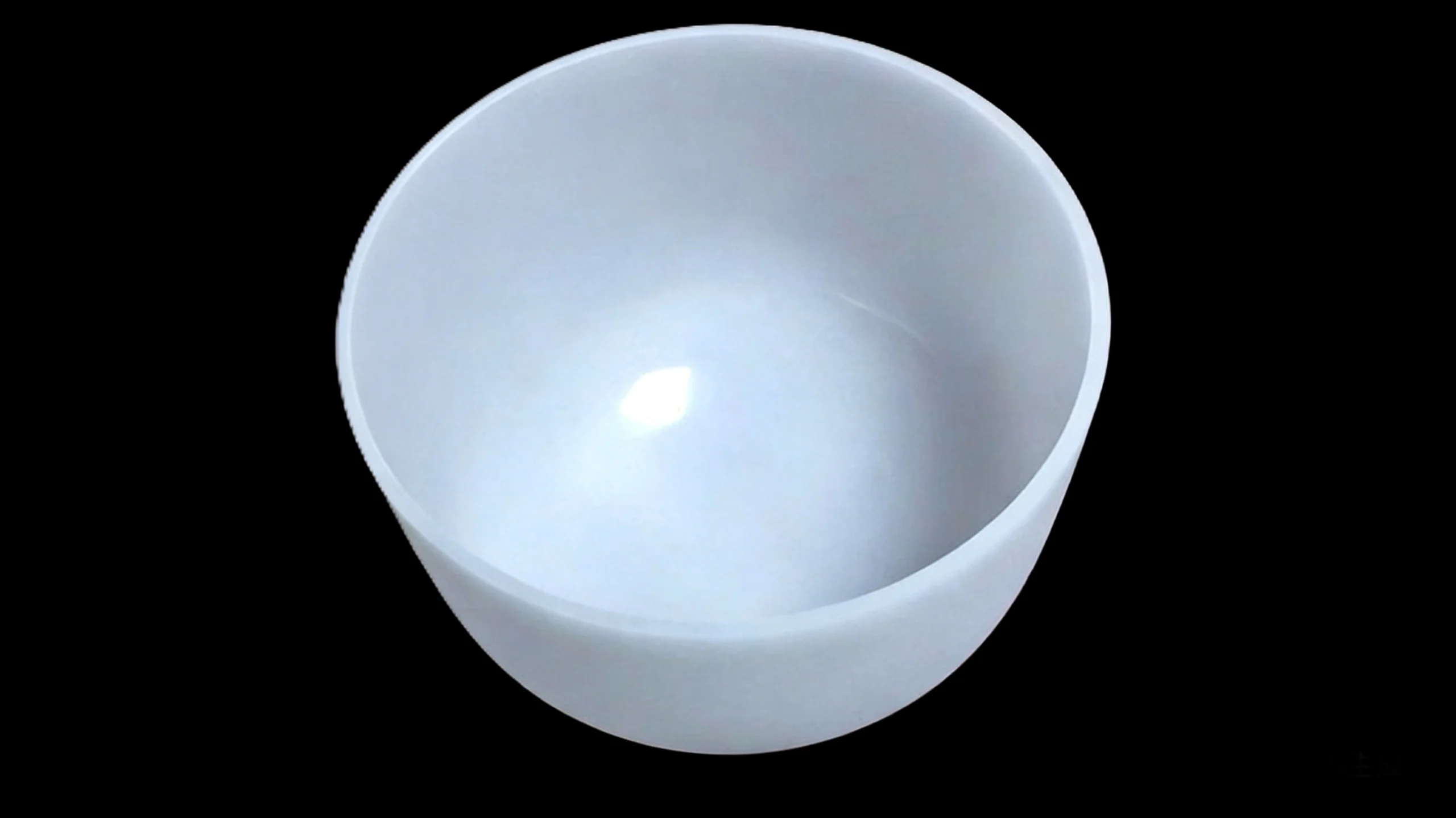
A quartz crucible — also called a fused quartz crucible, fused silica crucible, or quartz glass crucible — is a high-purity fused silica vessel used to hold, heat, and melt materials at high temperature with minimal contamination. It is used for laboratory ashing, acid digestion, and trace-element analysis, for calcination and heat treatment, and for high-temperature melts such as Czochralski (CZ) silicon crystal pulling.
FGQuartz is a manufacturer and supplier of custom quartz crucibles: clear and opaque fused silica crucibles with SiO₂ ≥ 99.99% in round-bottom, flat-bottom, cylindrical, conical, and rectangular forms, with or without lids. Diameter, height, wall thickness, base, rim, spout, flange, threaded neck, and capacity follow the customer drawing, including CZ-grade double-layer construction. Custom manufacturing is available from a single prototype, with no minimum order quantity. We ship to the USA, Europe, Australia, India, and worldwide.
Quick answer
What is a fused quartz crucible used for? Fused quartz crucibles contain high-temperature melts and chemical reactions with minimal contamination, most notably in Czochralski (CZ) silicon crystal pulling, high-temperature calcination, and laboratory acid digestion or trace-element analysis.
Key takeaways
- A cylindrical quartz crucible has a uniform wall diameter from top to bottom, giving even heat distribution and a stable seating fit.
- CZ crucibles are double-layer: an opaque outer layer for insulation and strength, and a clear, bubble-free inner layer that touches the melt. They are generally single-use, while cleaned laboratory crucibles can be reused across cycles.
- Quartz is chemically inert and non-conductive; graphite tolerates higher temperatures but can add carbon. Not for HF, hot concentrated phosphoric acid, or molten alkali fluxes.
Written by the FGQuartz Engineering Team · Updated October 2026
On this page: Specifications · Choosing a crucible · Comparisons · Crucible types · Project examples · Applications · FAQ and quote
Lead time depends on size and drawing complexity; the quote confirms the schedule.
Features of high-purity fused quartz crucibles
Product features
Quartz crucible specifications
Technical specifications
Values below describe the standard build for fused silica crucibles. Dimensions, wall, and tolerances are set from the drawing and confirmed in design-for-manufacture (DFM) review.
| Parameter | Specification |
|---|---|
| Material | High-purity fused quartz / fused silica (SiO₂ ≥ 99.99%). Clear or opaque fused silica. |
| Shape | Round-bottom, flat-bottom, cylindrical, conical, rectangular, and boat-style crucibles. |
| Construction | Single-layer crucibles, and CZ-grade double-layer crucibles with an opaque outer layer and a clear, bubble-free inner layer. |
| Diameter and height | Made to drawing. No published SKU size chart. |
| Capacity | Follows the diameter, height, and wall on the drawing, including non-standard capacities. |
| Wall thickness | Specified on the drawing, from thin-wall analytical crucibles to heavy-wall melting crucibles. |
| Rim, spout, and neck | Plain, flared, or fire-polished rim; pouring spout, flange, or threaded neck when required. |
| Lids | Matching quartz lids, flat or domed, ground or loose-fit to drawing. |
| Working temperature | Continuous to 1200°C, short-term to 1300°C. |
| Purity | SiO₂ ≥ 99.99%. Trace metals and OH vary by grade. |
| Surface finish | Fire-polished or as-formed, annealed after hot work. |
| Processing | Diamond cutting, CNC machining, oxy-hydrogen flame forming and welding, fire polishing, annealing. |
| Customization | Build-to-print from DXF, STEP, IGES, or PDF, or from a qualified sample. Single prototypes through production. No MOQ. |
Full thermal, mechanical, optical, and chemical tables: Technical Specifications. Tolerances and capacity are set per drawing — they are not catalog numbers.
Clear, opaque, or double-layer: choosing the crucible
Crucible selection
Clear fused quartz crucibles suit laboratory work, where you want to see the sample, and clean high-temperature heating with a low analytical blank. Opaque fused silica crucibles scatter infrared, insulate better, and spread heat more evenly, which helps in melting and heat-treatment furnaces.
Quartz glass, fused quartz, and fused silica all describe amorphous high-purity SiO₂: fused quartz is melted from natural quartz crystal, fused silica is synthetic, usually from SiCl₄. Send the material to be heated, peak temperature, atmosphere, and volume so grade, wall, and shape can be matched. Background: What is quartz glass?
Typical properties of fused silica
Typical values for high-purity fused silica. Optical transmission and OH content vary by grade.
| Continuous service | 1200°C |
| Short-term maximum | 1300°C |
| Softening point | ≈ 1680°C |
| Annealing point | ≈ 1215°C |
| Strain point | ≈ 1120°C |
| Thermal expansion (20–300°C) | 5.5 × 10⁻⁷ /°C |
| Thermal conductivity (20°C) | ≈ 1.4 W/(m·K) |
| Density | ≈ 2.2 g/cm³ |
Chemical note: quartz is also attacked by molten alkali fluxes such as NaOH and Na₂CO₃; confirm compatibility before melting reactive metals.
Laboratory crucible vs CZ crystal-growth crucible, and quartz vs graphite
Comparison
| Point | Laboratory crucible | CZ crystal-growth crucible |
|---|---|---|
| Typical use | Ashing, acid digestion, calcination, thermal analysis. | Holding the silicon melt during Czochralski crystal pulling. |
| Contact surface | Clear or opaque wall, as specified. | Clear, bubble-free inner layer to minimize contamination. |
| Reuse | Typically reusable across cycles if properly cleaned. | Generally single-use because of extreme thermal cycling. |
| Point | Quartz crucible | Graphite crucible |
|---|---|---|
| Maximum temperature | About 1200°C continuous; short-term to 1300°C. | Much higher. |
| Contamination | Chemically inert and electrically non-conductive; no carbon. | Can introduce carbon pickup. |
| Visibility | Clear grades allow visual checks. | Opaque. |
| Best for | Processes where carbon or electrical contamination must be avoided. | Very high-temperature processes where carbon is acceptable. |
Quartz crucible types we fabricate: shapes, lids, and construction
Customization
FGQuartz does not publish a fixed crucible size list. Each crucible is made to your sample, furnace, and process, from a single prototype to production, with no minimum order quantity. Non-crucible custom parts are on the custom quartz glass page.
| Crucible type | Typical use | What is fabricated |
|---|---|---|
| Laboratory crucibles | Ashing, sample prep, and thermal analysis | Clear, thin-wall crucibles in round-bottom or flat-bottom form, with optional lids. Specify: diameter, height, wall thickness, capacity, and whether a lid is needed. |
| Cylindrical crucibles | Even heating and stable seating in the furnace | Cylindrical crucibles in clear or opaque fused silica, with plain or fire-polished rims, made to drawing. Specify: outer diameter, height, wall thickness, and rim type. |
| Melting crucibles | High-purity melting and heat treatment | Heavy-wall clear or opaque fused silica crucibles sized to the furnace and charge. Specify: the furnace size, charge volume, peak temperature, and the outer diameter and height the furnace allows. |
| CZ crystal-growth crucibles | Czochralski silicon crystal pulling | Double-layer crucibles with an opaque outer layer and a clear, bubble-free inner layer. Specify: outer diameter, height, wall thickness, and charge capacity. |
| Opaque crucibles | Furnaces needing better insulation and even heating | Opaque fused silica crucibles cut, formed, and finished to drawing. Specify: diameter, height, wall thickness, and whether a lid is needed. |
| Crucibles with lids | Atmosphere control and reduced evaporation | Matching quartz lids, flat or domed, with vent holes on request. Specify: lid shape (flat or domed), fit (ground or loose), and the vent-hole size and position. |
| Boat-style crucibles | Tube-furnace heating and combustion | Open trough crucibles in custom lengths that slide into a furnace tube. Specify: length, width, depth, and the furnace tube ID. |
| Evaporating dishes | Evaporation, drying, and heating of samples | Open round dishes in clear fused quartz, fire-polished and annealed. Specify: diameter, depth, and wall thickness. |
| Custom crucibles | OEM and non-standard vessels | Build-to-print or reverse-engineered crucibles with flanges, threaded necks, spouts, handles, or drilled features. Specify: your drawing or sample, plus the flange, neck, spout, handle, or hole details. |
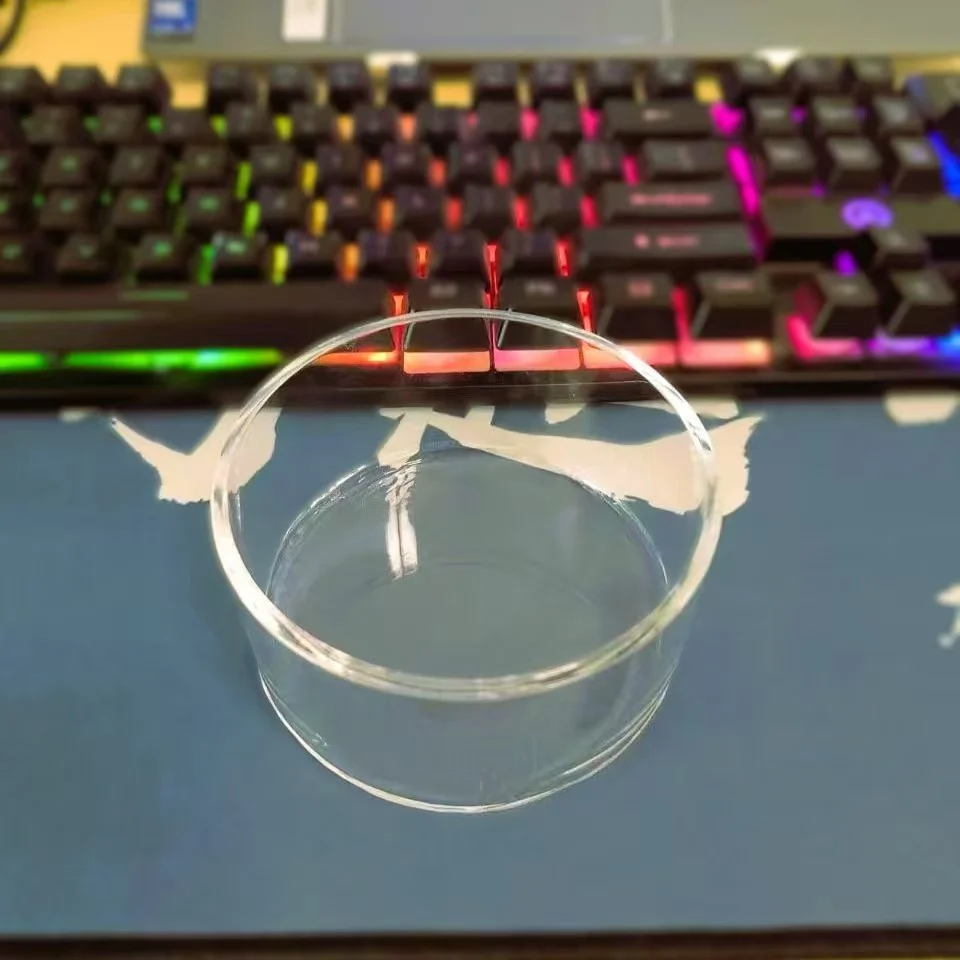
Quartz crucible and evaporating dish, formed, fire-polished, and annealed in the same FGQuartz facility.
Representative crucible builds
Project examples
Three typical custom crucible projects, described by the requirement, the build route, and what is checked against the drawing. Customer names and confidential drawing data are withheld.
01 · Laboratory
Thin-wall analytical crucible with lid
Requirement. A clean, low-blank vessel for ashing and sample preparation.
How it is built. Clear fused silica body formed from tube stock, rim fire-polished, matching lid ground to fit, annealed after hot work.
Checked against the drawing. Diameter, height, wall thickness, and lid fit.
02 · Furnace processing
Cylindrical melting crucible
Requirement. A uniform-wall vessel that seats stably and heats evenly in a batch furnace.
How it is built. Heavy-wall clear or opaque fused silica formed to a cylindrical body with a fire-polished rim, then annealed.
Checked against the drawing. Outer diameter, height, wall thickness, and rim condition.
03 · Custom vessel
Crucible with spout and threaded neck
Requirement. A non-standard vessel that pours cleanly and connects to existing equipment.
How it is built. Body formed to drawing, pouring spout flame-formed, threaded neck CNC-machined, fire-polished and annealed.
Checked against the drawing. Capacity, spout geometry, thread form, and overall height.
Formed, finished, and annealed under one ISO 9001 system
Manufacturing and quality
FGQuartz operates a 15,000 m² facility in Lianyungang covering CNC diamond machining, oxy-hydrogen flame forming, welding, fire polishing, and annealing, so crucibles are formed and finished in one plant. Learn more about FGQuartz.
Handling and cleaning: clean with an acid bath or alcohol wipe before high-temperature use, because alkali salts and fingerprints catalyze devitrification above roughly 1150°C. Heat and cool at a controlled rate and lift with tongs that do not chip the rim.
Quartz crucible applications
Applications
Why specify FGQuartz
Manufacturer
Procurement questions
FAQ
Clean with an acid bath or alcohol wipe to remove surface contaminants such as alkali salts, which act as catalysts for devitrification above roughly 1150°C.
Yes. FGQuartz manufactures custom crucibles to CAD drawings, including custom flanges, threaded necks, pouring spouts, and non-standard capacities.
The opaque outer layer provides thermal insulation and structural strength during long, high-temperature pulls, while the clear, bubble-free inner layer directly contacts the silicon melt, minimizing contamination.
Laboratory crucibles can typically be reused across multiple cycles if properly cleaned. CZ crucibles used in silicon pulling are generally single-use due to extreme thermal cycling.
Pricing depends on size, wall construction (single-layer vs. CZ-grade double-layer), geometry complexity, and order volume.
Quartz crucibles are chemically inert and non-conductive, ideal where carbon or electrical contamination must be avoided. Graphite tolerates much higher temperatures but can introduce carbon pickup.
A cylindrical quartz crucible has a uniform wall diameter from top to bottom rather than a tapered or conical shape, providing even heat distribution and a stable seating fit.
Fused quartz crucibles contain high-temperature melts and chemical reactions with minimal contamination — most notably in Czochralski (CZ) silicon crystal pulling, high-temperature calcination, and laboratory acid digestion or trace-element analysis.