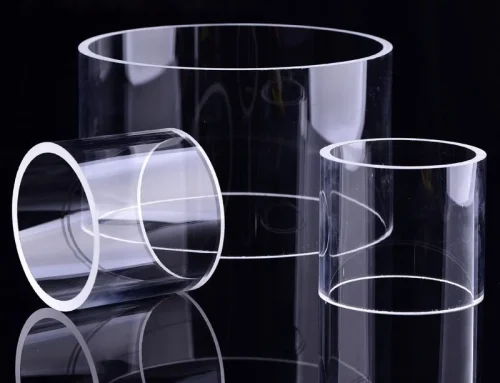
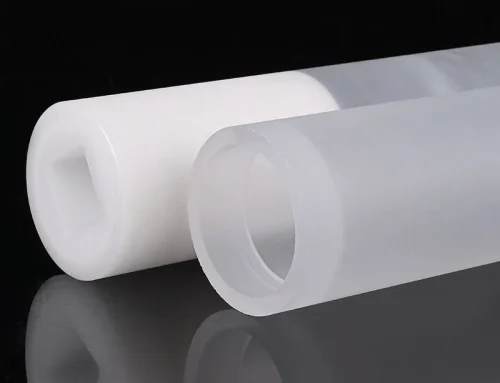
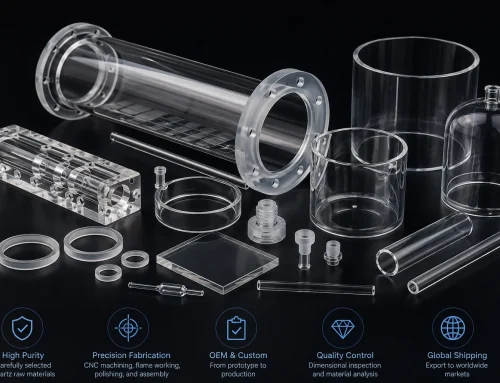
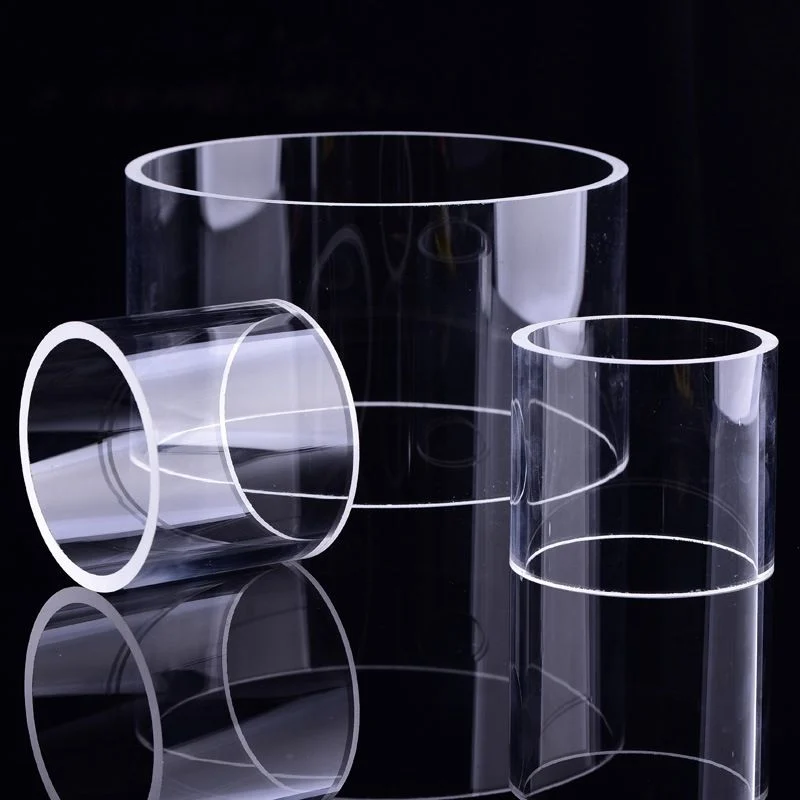
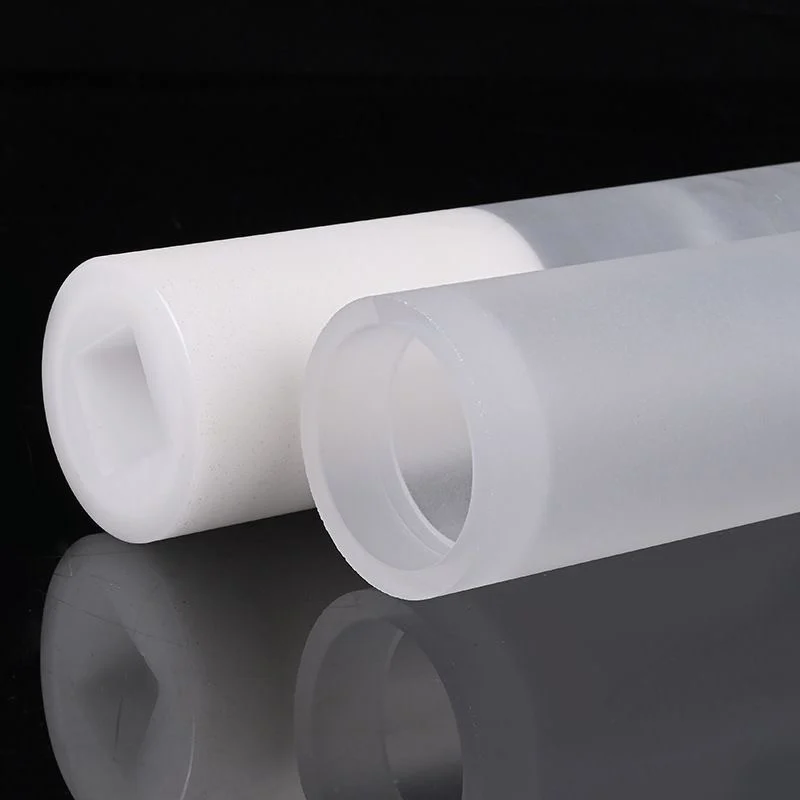
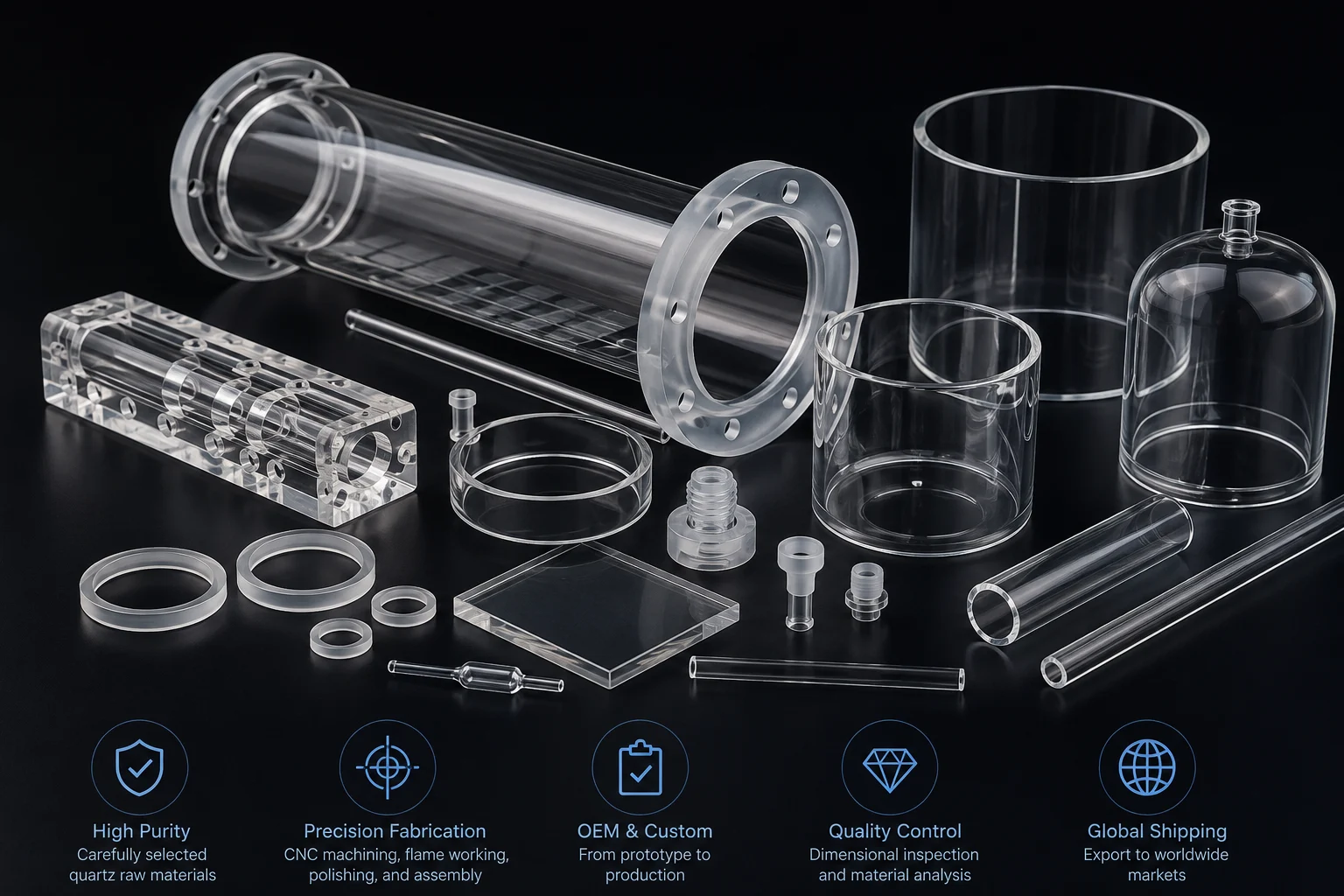
Processing quartz glass demands a heat source that matches the material’s uncompromising purity requirements. Conventional propane or natural-gas torches introduce carbon residues and uneven thermal gradients — both of which cause stress fractures, surface defects, and contamination that are impossible to remove once fused into the workpiece. FGQuartz designs and supplies oxyhydrogen torches — also referred to as hydrogen-oxygen torches — specifically for high-purity fused quartz fabrication, where flame cleanliness is as important as flame temperature.
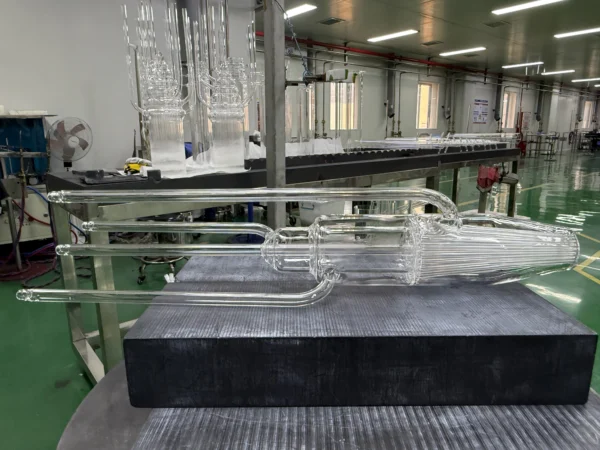
Carbon-free hydrogen-oxygen flame enables precision sealing and fusion of quartz glass without contamination or residue.
What Is an Oxyhydrogen Torch and Why Does It Matter for Quartz?
An oxyhydrogen torch combusts pure hydrogen with pure oxygen, producing a flame whose only by-product is water vapor. At peak operating conditions the flame temperature exceeds 2800 °C — well above the softening point of fused silica (1680 °C) and sufficient to perform fusion joining, tube sealing, preform collapsing, and flame polishing with full control over the heat zone.
The absence of carbon-containing fuel is the defining advantage. When a hydrocarbon torch flame touches quartz glass, residual carbon deposits bond to the surface and diffuse into sub-surface layers during high-temperature processing. Those contamination sites degrade UV transmission, reduce dielectric integrity, and introduce metallic impurities into wafer-processing environments. An oxyhydrogen flame eliminates this failure mode entirely.
Key Performance Characteristics
Carbon-Free Combustion
The H₂ + O₂ reaction produces only H₂O. No soot, no carbon monoxide, no hydrocarbon residues reach the quartz surface. This is essential for semiconductor quartzware — diffusion tubes, process liners, and wafer carriers — where even trace carbon contamination can shift dopant profiles and compromise device yield.
Uniform Thermal Profile
FGQuartz torch designs distribute heat evenly across the working zone, minimising the steep thermal gradients that cause residual stress and downstream cracking. Controlled heat distribution is particularly important during large-diameter tube sealing and crucible rim repair, where a localised hot spot can propagate a fracture through an otherwise usable piece.
High-Temperature Capability
With a working flame exceeding 2800 °C, the torch handles the full range of quartz glass flame working operations — fusion joining of tube sections, end-cap sealing, preform surface fire polishing, and custom component shaping. The same torch system that seals a 10 mm laboratory tube can be scaled to handle 200 mm-diameter process tubes for semiconductor furnaces.
Fused Quartz Nozzle Construction
The torch nozzle itself is manufactured from high-purity fused quartz. This avoids the metal-ion contamination risk inherent in stainless-steel or brass nozzles at elevated temperatures. The quartz nozzle withstands thermal shock across repeated heating cycles and maintains its bore geometry for consistent flame shape throughout its service life.
Operational Efficiency
The system starts and reaches working temperature in under two minutes, with flow rates adjustable via needle valves for fine control over flame intensity. Hydrogen and oxygen are supplied from standard compressed-gas cylinders or an on-site electrolyser. Operating costs are low relative to acetylene-oxygen systems, and there are no carbon deposits to clean from the workstation or the quartz surface.
Application Areas
FGQuartz oxyhydrogen torches serve a broad range of fused silica fabrication processes:
- Quartz tube and rod fusion joining — connecting sections of diffusion tubes, process liners, and laboratory tubework with fully fused, bubble-free joints
- End-cap and flange sealing — creating hermetic seals for quartz vessels, reaction chambers, and lamp envelopes
- Optical fiber preform processing — collapsing substrate tubes and consolidating VAD/OVD soot blanks
- Quartz crucible repair and rim dressing — restoring chipped or cracked rims on CZ growth crucibles to extend service life
- Fire polishing of machined surfaces — removing sub-surface damage from CNC-machined quartz to restore optical clarity and chemical resistance
- Custom quartz component shaping — forming flanges, bends, and complex geometries in prototype and production quantities
Oxyhydrogen vs Acetylene-Oxygen: A Practical Comparison
Acetylene-oxygen torches are widely available and familiar to glassblowers, but they are a poor match for high-purity quartz work. Acetylene combustion produces carbon monoxide and soot as intermediate species even under optimised conditions; the resulting flame deposits carbon on any quartz surface it contacts. The oxyhydrogen flame’s oxidising character keeps fused silica in its correct stoichiometric state, produces no contaminating species, and leaves a surface that requires no post-treatment before assembly into a cleanroom environment.
Technical Specifications
- Maximum flame temperature: > 2800 °C
- Fuel gases: high-purity H₂ and O₂ (cylinder or electrolysis supply)
- Combustion by-product: H₂O only
- Nozzle material: high-purity fused quartz
- Flow control: independent needle valves for H₂ and O₂
- Applications: quartz glass fusion joining, tube sealing, fire polishing, preform processing
Why Process Engineers Specify FGQuartz Torch Systems
Since 2005, FGQuartz has supplied oxyhydrogen torch systems alongside our broader range of high-purity quartz glass tubes, quartz crucibles, and custom quartz glass components. Our torch designs reflect two decades of feedback from semiconductor equipment makers, optical fiber manufacturers, and research laboratories whose process requirements tolerate no compromise on flame purity or thermal control.
If you are evaluating torch systems for a new quartz fabrication process, our technical team can advise on nozzle selection, flow-rate settings, and integration with your existing gas supply infrastructure. We respond to all enquiries within 24 hours.