Home / Applications / Fiber Optic
MCVD, VAD, and OVD preform components
Fiber Optic Quartz
Optical fiber begins as a fused silica preform, and the quartz components that make it must meet the same purity and dimensional standard as the fiber. FGQuartz makes substrate tubes, starting (target) rods, jacketing and overcladding tubes, mandrels and jigs, and custom lathe hardware from SiO₂ ≥ 99.99% fused silica for MCVD, VAD, and OVD preform processes, in dry (low-OH) and standard-OH grades.
FGQuartz builds fused silica components to drawing in any geometry that can be formed or machined from fused silica, and confirms feasibility in DFM review. Prototypes start from one piece, and quotes are typically returned within 24 business hours.
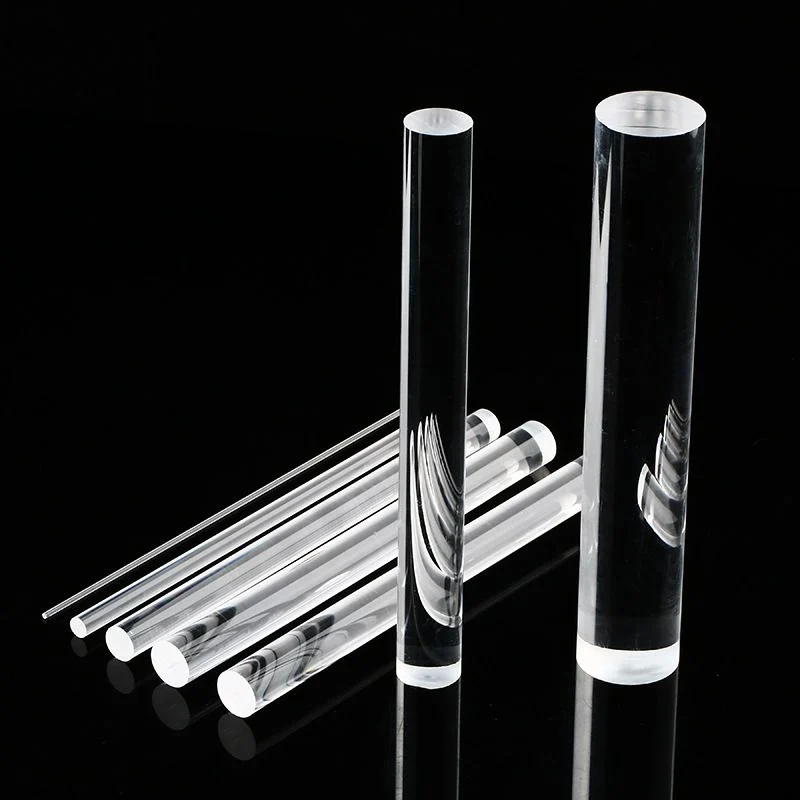
Quick answer
What quartz glass components are used in optical fiber preform manufacturing? Substrate tubes (MCVD), starting or target rods (VAD and MCVD), jacketing and overcladding tubes, and the mandrels, jigs, and lathe hardware that hold the preform. Their geometry and purity carry through to every meter of fiber drawn from the preform.
Key takeaways
- Concentricity, wall uniformity, and straightness set the refractive-index profile and fiber yield; centerless-ground starting rods typically reach straightness and concentricity better than 0.1 mm/m.
- Dry (low-OH) substrate tubes are typically specified for low-water-peak telecom fiber such as ITU-T G.652.D, where loss near 1383 nm must be low.
- Rods are supplied from 3 mm to 300 mm OD in lengths up to 3000 mm, and larger solid ingots are available on request.
- Quartz is not suitable for HF, hot concentrated phosphoric acid, or hot strong alkalis.
Written by the FGQuartz Engineering Team · Updated October 2026
On this page: Why quartz · Preform routes · OH grade · Find components · Limits · Custom parts · Scenarios · FAQ · Quote
Lead time depends on size and drawing complexity; the quote confirms the schedule.
Why does fiber manufacturing depend on fused silica hardware?
Why quartz
Property data is on the technical specifications page.
| Problem | Why ordinary materials struggle | How fused silica helps |
|---|---|---|
| Geometry carried into every meter | Eccentricity, wall variation, or bow in a tube is preserved along the whole fiber. | Tubes and rods are drawn and, where needed, centerless-ground to control diameter, wall, and straightness. |
| Purity and water absorption | OH and metallic impurities add absorption and scattering loss. | High-purity fused silica with controlled metals, and dry (low-OH) grades for low-water-peak fiber. |
| High-temperature deposition and collapse | Ordinary glass cannot hold shape at deposition and collapse temperatures. | Fused silica holds geometry at preform process temperatures with near-zero expansion. |
| Handling and alignment | Loose fits upset concentricity on the lathe. | CNC-machined chucks, inserts, jigs, and holders matched to the glass lathe. |
How is quartz used in each preform route?
Preform routes
The three routes below cover most fiber-optic quartz demand. The hardware differs; the demand for purity and geometry does not.
MCVD: Modified Chemical Vapor Deposition
Workflow
- Mount the substrate tube on the lathe
- Deposit layers inside the rotating tube
- Collapse into a solid preform
- Overclad if required
| Point | Detail |
|---|---|
| Where quartz is used | Substrate tubes and jacketing tubes, plus lathe chucks and collapse handling. |
| Why quartz | Tube geometry, concentricity, and inner surface quality set the index profile after collapse. |
| Watch-outs | State OD, ID, wall, length, tolerance, and OH grade. Custom lengths, diameters, and tolerances are made to drawing. |
VAD: Vapor Axial Deposition
Workflow
- Mount the starting rod
- Grow soot axially
- Sinter into a preform
| Point | Detail |
|---|---|
| Where quartz is used | Starting (target) rods, reaction tubes, and sintering liners. |
| Why quartz | Diameter uniformity, straightness, and a clean surface keep the core geometry under control. |
| Watch-outs | Centerless-ground rods give tighter straightness and concentricity than as-drawn rods. |
OVD: Outside Vapor Deposition
Workflow
- Mount the mandrel or starting rod
- Deposit soot on the outside
- Sinter and finish with jacketing
| Point | Detail |
|---|---|
| Where quartz is used | Mandrels, starting rods, jacketing tubes, and chamber components. |
| Why quartz | Clean quartz components limit contamination, and wall-uniform jacketing tubes finish the preform before draw. |
| Watch-outs | Provide the lathe platform and a drawing or worn sample for jigs and mandrels. |
Which OH grade for which fiber?
OH grade
Impurity limits (Al, Fe, Na + K, total metals) are on the technical specifications page and vary by grade. Confirm the grade against your fiber specification.
| Grade | OH content | Use |
|---|---|---|
| Dry grade (low OH) | OH below 10 ppm | Typically specified for low-water-peak telecom fiber such as G.652.D, where the 1383 nm region must have low loss. |
| Standard / higher-OH | Quoted to your specification | Better deep-UV transmission but higher infrared absorption; used when 1383 nm loss is not a limit. |
Find the right quartz component by preform step
Find components
This table points to the pages that hold the specifications and sizes.
| Preform step | Where to look | What is available |
|---|---|---|
| Deposition substrates | Quartz glass tubes | Substrate tubes and jacketing tubes |
| Starting and target rods | Quartz glass rods | 3–300 mm OD, up to 3000 mm, centerless-ground |
| Lathe hardware and jigs | Custom quartz glass | Chucks, inserts, mandrels, and holders to drawing |
| Reaction and sintering parts | Thermal processing | Flame-formed vessels and liners |
When quartz is not the right choice
Limits
Quartz is chosen for purity, thermal stability, and chemical inertness. It is not suited to every environment.
| If your process involves… | Quartz suitability | Consider |
|---|---|---|
| HF (hydrofluoric acid) | Not suitable. HF attacks fused silica. | An HF-compatible material, such as a fluoropolymer |
| Hot concentrated phosphoric acid | Not suitable. | A compatible material for the bath |
| Hot strong alkalis (for example hot KOH or NaOH) | Not suitable; quartz is attacked. | A compatible material for the bath |
| Continuous service above about 1200°C | Beyond the continuous working limit of fused silica. | A higher-temperature ceramic |
Can FGQuartz make my fiber-optic part if it is not on the list?
Custom parts
FGQuartz builds fused silica components to drawing in any geometry that can be formed or machined from fused silica, and confirms feasibility in DFM review. There are three paths:
- Use a standard item from the product pages.
- Modify a standard item: a different size, a port, a flange, a lid, or a changed slot or hole pattern.
- Build to your drawing, sketch, or sample: DXF, STEP, IGES, PDF, a dimensioned sketch, or a worn sample with key dimensions.
Commonly requested
- Substrate and jacketing tubes in custom lengths, diameters, and tolerances
- Centerless-ground starting or target rods
- Mandrels, jigs, chucks, and holders matched to a glass lathe
- Reaction vessels and sintering liners made to drawing
- Replacements reproduced from a worn sample
Prototypes start from one piece. Simpler custom parts typically take 7–14 days and complex assemblies 3–6 weeks. See custom quartz glass fabrication, thermal processing, and cold processing.
Illustrative scenarios
Scenarios
These are typical requests, not customer case studies.
| Situation | What FGQuartz builds | What to send |
|---|---|---|
| A preform line needs tubes with tighter concentricity | Substrate tubes to a tighter tolerance class | OD, ID, wall, length, tolerance, and OH grade |
| A VAD line wants straighter starting rods | Centerless-ground starting rods | Diameter, length, and straightness requirement |
| A lathe needs a replacement chuck insert | A CNC-machined part reproduced from the worn sample | The sample or drawing and the lathe platform |
| A line adds a new preform design | A matched set of tubes and rods to the new geometry | Fiber design, process route, and dimensions |
Frequently asked questions
FAQ
More answers are in the full quartz glass FAQ.
Yes. A sample plus key dimensions is typically sufficient for our engineering team to reproduce mandrels, jigs, or substrate components.
Ultra-high-purity synthetic or natural fused silica with tightly controlled trace metal content, since even minor impurities can affect fiber attenuation performance.
Yes. FGQuartz manufactures substrate tubes and rods to your specific length, diameter, and tolerance requirements.
MCVD substrate tubes need very tight dimensional control since deposition happens inside the tube. VAD and OVD processes rely more heavily on starting rods and mandrels with precise straightness and OD accuracy.
Wall thickness variation and concentricity directly affect refractive index control during preform deposition, which determines the optical performance of the finished fiber.
High-purity substrate tubes, centerless-ground starting rods, and jacketing/overcladding tubes used in MCVD, VAD, and OVD preform manufacturing processes.