Solar Photovoltaic Quartz: A Complete Guide to Crucibles, Tubes & the Cell Line
Every solar wafer in the world starts its life inside a quartz crucible. From the molten silicon that becomes an ingot, to the diffusion tubes that form the cell junction, quartz is the material the entire PV supply chain is built on. This guide explains what each solar quartz product does, why crucible quality decides ingot yield and cell efficiency, and why the shift to N-type cells is rewriting the purity rulebook.
Ask a solar ingot engineer what keeps them up at night and “the crucible” comes up faster than almost anything else. A single Czochralski pull runs for many hours at a temperature where the quartz is operating right at the edge of its own softening range, holding a melt of silicon that is mercilessly sensitive to contamination. If the crucible sheds particles, releases bubbles, or devitrifies in the wrong way, the growing crystal can lose its single-crystal structure in seconds — and an entire ingot’s worth of value is gone.
Solar photovoltaic quartz products — crucibles, diffusion tubes, wafer boats, bell jars and gas-delivery hardware — are the high-temperature consumables that the whole PV value chain depends on. Their purity, geometry and thermal behavior shape silicon crystal quality, junction uniformity and ultimately the conversion efficiency of the finished cell.
This guide walks through the full picture: what each solar quartz product does, how they work across the value chain from polysilicon to packaged cell, why the quartz crucible is the single most yield-critical consumable in the chain, and what the practical rules are for qualification, lifecycle and the raw-material supply that underpins it all.
This guide covers the high-temperature quartz consumables used in crystal growth and solar cell fabrication — CZ and directional-solidification crucibles, diffusion and LPCVD tubes, and wafer boats. It does not cover module-level glass (cover glass, encapsulant) or the metallization and stringing steps, where quartz plays no role.
01 — The Quartz Crucible at the Heart of Solar, and Why Fused Silica
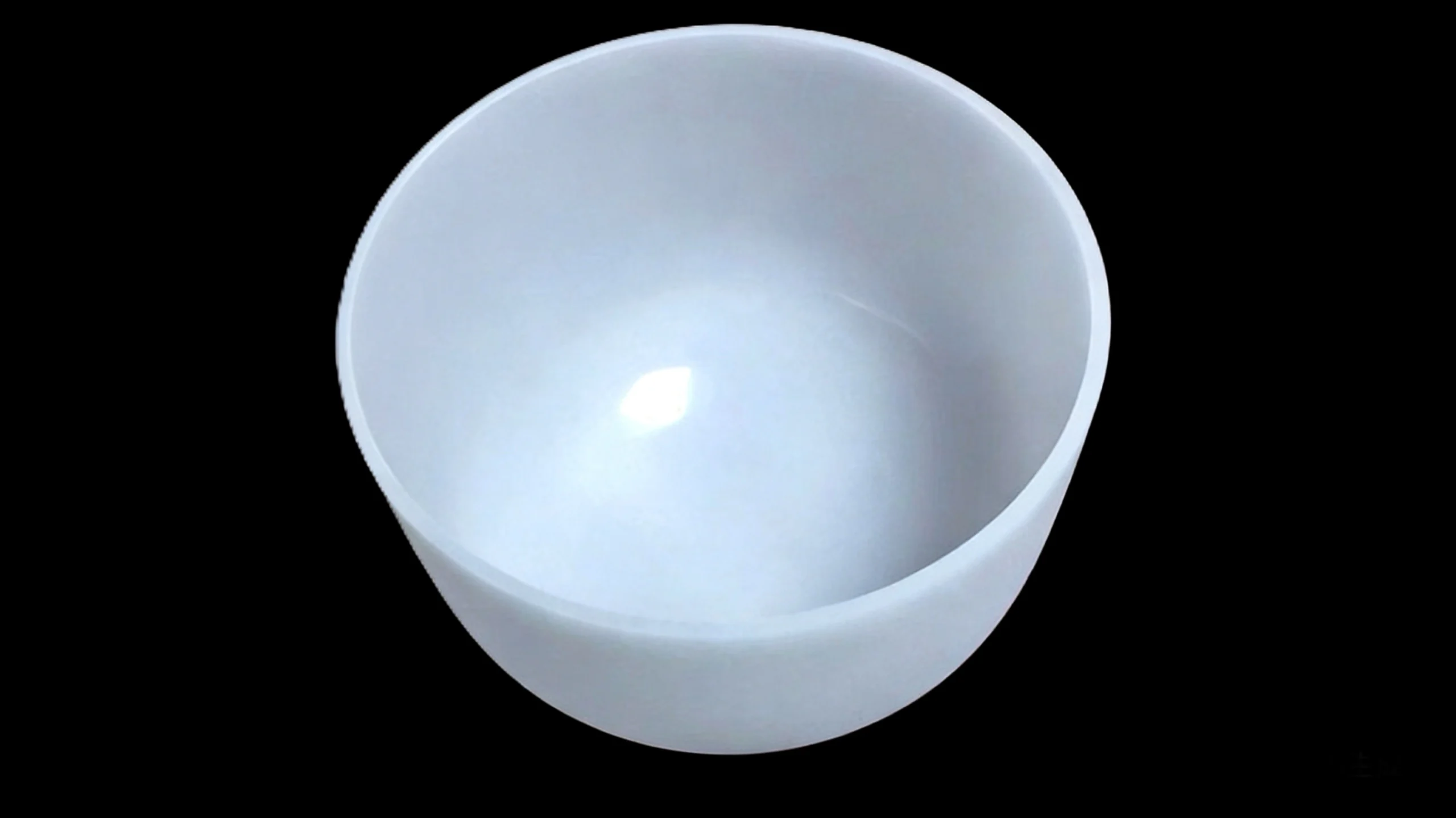
A solar quartz crucible is a fused silica vessel that holds molten silicon during crystal growth. In the Czochralski (CZ) process — the route to almost all monocrystalline solar wafers today — polysilicon is melted inside the crucible at a temperature above silicon’s melting point, and a seed crystal is dipped in and slowly withdrawn while rotating, pulling a single cylindrical crystal (the ingot) out of the melt.
The crucible’s job sounds passive: just hold the melt. In reality it is the single most demanding component in the whole growth system. It operates close to its own softening range while in direct contact with chemically aggressive molten silicon for the entire pull. Every property of the crucible — its purity, its bubble content, the way its inner surface behaves at temperature — feeds directly into the quality of the crystal growing above it.
Why fused silica, and why it is pushed to its limit
Fused silica is the only practical material that combines the high-temperature capability, chemical compatibility and attainable purity that silicon crystal growth demands. It does not introduce the metallic contamination that a metal or graphite vessel in direct contact with the melt would, and it can be produced at the purity levels that solar — and especially N-type solar — silicon requires.
The catch is temperature. Quartz softens at around 1680 °C, and the silicon melt sits not far below that. Over a long pull the crucible wall gradually softens and is supported only by an outer graphite susceptor — which is exactly why crucible wall thickness uniformity, roundness and high-temperature stability matter so much. A crucible that sags, deforms or develops a weak spot can deform enough to disturb the melt or, in the worst case, fail.
The two-layer structure that makes a CZ crucible work
A production CZ crucible is not a single uniform piece of glass. It is built from two engineered zones, arc-fused from high-purity quartz sand in a rotating mold, each doing a different job:
- Transparent, bubble-free inner layer — the surface in direct contact with the melt. It is made from the highest-purity sand and is fused to be essentially free of bubbles, because any bubble that opens at the melt interface releases a gas pocket and a particle into the silicon. This layer’s purity and bubble control directly govern how much oxygen and metallic impurity the melt picks up.
- Bubbly, opaque outer layer — the structural and thermal body of the crucible. Its controlled bubble content scatters and diffuses radiant heat for a more uniform temperature field around the melt, and provides the mechanical body that the inner layer is built on. It can be made from a slightly less demanding sand grade than the inner layer.
The inner layer and outer layer are doing opposite jobs — one wants to be perfectly bubble-free and ultra-pure, the other wants controlled bubbles for thermal diffusion and strength. Getting both right in one fused piece, with a clean transition between them and consistent wall thickness, is the core of crucible manufacturing know-how. This is why two crucibles with the same nominal size and purity grade can deliver very different ingot yields.
02 — The Complete Solar Quartz Product Ecosystem
The crucible is the headline product, but solar manufacturing uses quartz at several stages of the value chain. Crystal growth consumes crucibles; cell fabrication consumes furnace tubes and boats. Understanding the full set helps procurement and process teams see where quartz quality enters the yield equation.
| Stage | Product | Primary Function | Why Quartz Quality Matters |
|---|---|---|---|
| Crystal Growth | CZ Quartz Crucible | Holds molten silicon during Czochralski monocrystalline pulling | Inner-layer purity and bubble control set melt contamination, oxygen level and dislocation risk — i.e. ingot yield |
| Crystal Growth | DS / Cast Quartz Crucible | Large square vessel for directional solidification of multi- and cast-mono ingots | Wall integrity and a clean release coating prevent ingot sticking, cracking and contamination of the cast block |
| Crystal Growth | Quartz Recharge / Feed Tube | Delivers granular polysilicon into the melt for recharge (RCZ) and continuous (CCZ) pulling | Must feed without introducing particles; enables multiple ingots per crucible campaign |
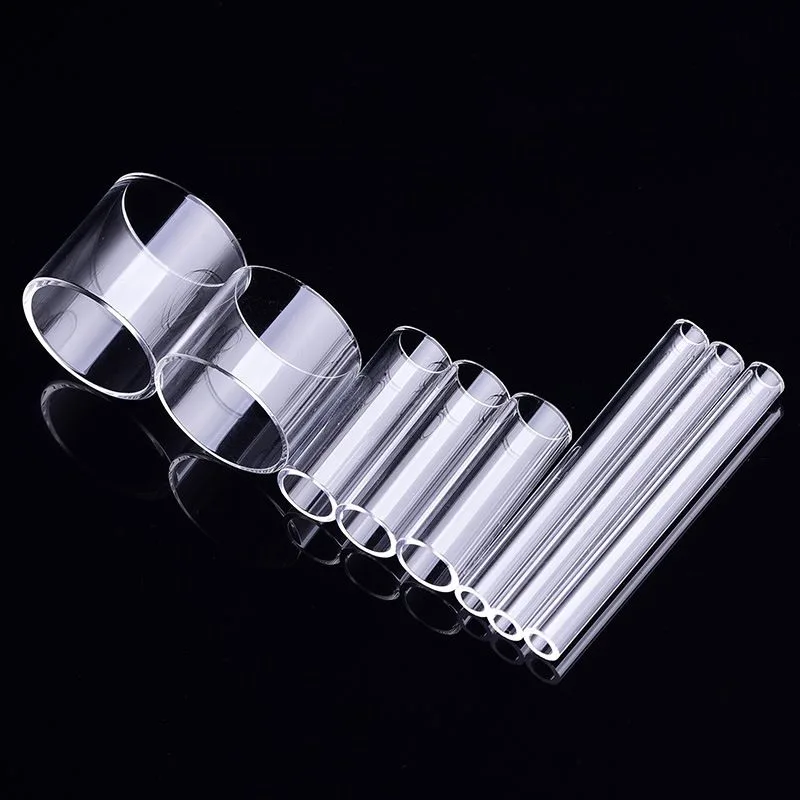
| Cell — Diffusion | Quartz Furnace / Diffusion Tube | The sealed reaction chamber for thermal diffusion (POCl₃ emitter, or boron for N-type) | Bore smoothness and purity control particle and dopant-memory contamination across the wafer batch |
| Cell — Diffusion | Quartz Wafer Boat | Holds solar wafers at defined positions through the diffusion tube | Slot geometry and dimensional stability set wafer-to-wafer junction uniformity and breakage rate |
| Cell — Deposition | LPCVD Quartz Tube & Boat | Chamber and carrier for in-situ poly-silicon deposition in TOPCon passivating-contact cells | Polished bore and managed deposit build-up control particle generation that directly costs cell yield |
| Auxiliary | Quartz Bell Jar / Liner | Chamber closure and protective lining for growth and process furnaces | IR transmittance uniformity governs how evenly radiant heat reaches the load |
| Auxiliary | Quartz TC Sleeve & Gas Nozzle | Temperature measurement protection and uniform process-gas delivery | Measurement accuracy and gas uniformity set the temperature and dopant field every wafer sees |
Solar diffusion tubes and wafer boats are close cousins of their semiconductor counterparts — the engineering principles are the same, scaled for larger wafer formats and higher throughput. If your interest is the fab side, the companion semiconductor quartz glass resources cover that ecosystem in depth. FGQuartz can supply custom solar quartz to your drawing — see custom quartz glass.
03 — How Solar Quartz Products Work Across the Value Chain
Let’s follow silicon from raw polysilicon all the way to a finished cell, watching where each quartz product enters and what it has to deliver at that step.
Step 1 · Monocrystalline (CZ) ingot growth — the crucible
What happens: chunk or granular polysilicon is loaded into the quartz crucible and melted by the surrounding graphite heaters. A seed crystal is dipped into the melt and slowly pulled upward while rotating, growing a single-crystal ingot. A dislocation-free (“zero defect”) crystal must be maintained for the full body of the ingot — and the crucible is the largest single influence on whether that happens.
What the crucible has to deliver: the bubble-free inner layer must not release particles or gas into the melt, because a single particle reaching the growth interface can trigger loss of single-crystal structure — at which point that portion of the ingot becomes scrap. The inner-layer purity sets how much oxygen and metallic impurity dissolves into the melt, which carries directly into the wafer and affects minority-carrier lifetime, the parameter that governs cell efficiency. The outer layer’s controlled bubbles diffuse radiant heat for a stable, symmetric thermal field, and the wall must hold its shape through the whole pull despite operating near the softening point. As wafers and ingots grow larger, the crucible grows with them — and the larger the crucible, the harder every one of these requirements becomes.
Step 2 · Directional solidification (cast) ingot — the DS crucible
What happens: in directional solidification, molten silicon in a large square crucible is cooled from the bottom upward so the crystal grows in a controlled direction, producing a multicrystalline or cast-mono block that is later cut into bricks and wafers. The crucible here is large, square and single-use.
What the crucible has to deliver: a silicon-nitride release coating is applied to the interior so the solidified block does not bond to the quartz and crack on cooling, and to act as a barrier against impurity diffusion from the crucible into the ingot. The crucible wall must survive the full melt-and-solidify cycle without cracking or warping. While the industry has shifted heavily toward monocrystalline, directional solidification remains relevant for cast-mono and specialty production, and the quartz quality demands are no less real.
Step 3 · Cell junction formation — diffusion tube and boat
What happens: sawn wafers are processed into cells. The defining step is thermal diffusion — driving phosphorus (POCl₃) into a p-type wafer to form the n+ emitter, or boron into an n-type wafer — which creates the p-n junction that makes the cell work. Wafers are loaded into a quartz wafer boat and processed inside a quartz furnace tube.
What the quartz has to deliver: the boat’s slot geometry and dimensional stability keep every wafer in an identical thermal and gas-flow environment, so junction depth and sheet resistance are uniform wafer-to-wafer — directly setting the spread in cell efficiency across a batch. The diffusion tube’s bore smoothness prevents by-product flakes from falling onto wafers, and its purity prevents dopant memory effects, where a tube that has absorbed dopant over many runs slowly re-releases it and shifts later batches. As with semiconductor diffusion, boats and tubes should be process-dedicated and cleaned on a strict schedule.
Step 4 · TOPCon passivating contacts — LPCVD tube and boat
What happens: high-efficiency N-type cell architectures such as TOPCon add a thin tunnel oxide and an in-situ doped polysilicon passivating-contact layer. This poly-silicon is commonly deposited in a low-pressure CVD (LPCVD) tube furnace, using quartz tubes and boats much like the semiconductor LPCVD process.
What the quartz has to deliver: LPCVD deposits poly-silicon on everything in the chamber, including the boat and tube interior, so highly polished inner surfaces are used to minimize the nucleation sites where deposits grow into particle-shedding flakes. Deposit build-up is tracked and the chamber is periodically cleaned before it crosses a particle threshold. Because TOPCon and other N-type cells are far more sensitive to metallic contamination than legacy p-type cells, the purity demanded of these LPCVD quartz parts is stepping up in lockstep with the N-type transition.
04 — Why the Crucible Is the Yield-Critical Consumable
Most consumables in a factory fail gracefully — performance drifts and you replace them. A quartz crucible can take an entire ingot down in a single event. Here are the failure modes that decide whether a pull succeeds, and what drives each one.
| Failure mode | What drives it | Consequence |
|---|---|---|
| Uncontrolled inner-wall devitrification | At melt temperature the inner surface slowly crystallizes (cristobalite). A controlled, adherent layer is fine — but an uneven or poorly adherent one flakes off | Flakes reach the growth interface, trigger loss of single-crystal structure, and scrap the affected ingot length |
| Bubble release from the inner layer | Bubbles trapped in the inner layer expand and open at the melt interface as the wall thins during the pull | Gas pockets and particles enter the melt, causing pinholes, voids and dislocation generation |
| Metallic contamination of the melt | Trace metals in the inner-layer sand dissolve into the silicon over the long pull | Reduced minority-carrier lifetime carried into every wafer — lower cell efficiency, especially in N-type |
| Oxygen pick-up | Silica dissolving from the crucible wall releases oxygen into the melt; the rate depends on inner-surface behavior and temperature | Excess interstitial oxygen forms defects that degrade lifetime and can cause light-induced degradation |
| Wall sag / deformation | The wall softens near its limit; uneven thickness, poor roundness or residual stress causes uneven softening | Melt-level instability, asymmetric thermal field, and in the worst case crucible failure mid-pull |
P-type silicon tolerates a level of metallic contamination that N-type silicon does not. As the industry transitions to N-type TOPCon and HJT cells for higher efficiency, the inner-layer purity required of the crucible rises sharply — impurity levels that were acceptable for p-type production can quietly cap the efficiency of an N-type line. This is the single biggest reason crucible specifications are tightening across the industry.
05 — Qualification, and the High-Purity Quartz Sand Bottleneck
Ingot makers do not qualify a crucible on a certificate alone. A typical evaluation looks at dimensional accuracy (wall thickness uniformity, roundness, height), inner-layer bubble content and thickness, purity of both layers with emphasis on the inner layer, devitrification behavior under simulated melt conditions, and — decisively — a full pull trial that compares ingot yield, dislocation rate, oxygen level and minority-carrier lifetime against the incumbent crucible. Only after a crucible holds up across many pull campaigns does it earn a place in volume production.
The raw-material question that defines the whole industry
The defining supply constraint in solar quartz is not the crucible-making capacity — it is the high-purity quartz sand used for the inner layer. Suitable natural high-purity quartz comes from a small number of deposits worldwide, and demand from the solar boom has repeatedly outstripped supply, making inner-layer sand the real bottleneck and a major swing factor in crucible cost and availability. Outer-layer sand is far more widely available; it is the inner layer that is scarce.
This is why crucible quality is so tightly coupled to sand sourcing, and why the industry is investing in synthetic and refined high-purity quartz to reduce dependence on a handful of natural sources. For buyers, it means a crucible’s real differentiator is often the consistency and origin of its inner-layer raw material — not the headline geometry.
Market structure
Tier 1 — established international and leading Chinese crucible makers with secured high-purity sand supply, proven inner-layer technology and validated long-campaign performance, serving the most demanding N-type ingot lines. Tier 2 — capable domestic manufacturers with strong mature-process performance, actively closing the gap on N-type-grade inner layers as sand sourcing and process control improve. Tier 3 — commodity suppliers producing standard crucibles for less demanding or p-type production, without the inner-layer raw material security or pull-validated data the advanced lines require.
06 — Lifecycle and Campaign Management
The crucible is a consumable, not a tool. Unlike a diffusion tube that runs for months, a CZ crucible is consumed by the campaign it serves. It devitrifies, its inner wall thins, and once the pull (or the recharge campaign) is finished it is retired — it cannot be cleaned and reused like a furnace tube. This makes crucible economics a question of cost per kilogram of good ingot, not cost per crucible.
Getting more out of one crucible: RCZ and CCZ. Two strategies extend the value won from a single crucible. In recharge CZ (RCZ), after one ingot is pulled, more polysilicon is melted into the same crucible and another ingot is grown — several ingots per crucible. In continuous CZ (CCZ), granular polysilicon is fed continuously through a quartz feed tube during growth, keeping the melt level constant and allowing very long single campaigns. Both push the crucible harder and for longer, which makes high-temperature stability and devitrification resistance even more important — a crucible that is merely adequate for a single pull may not survive a long CCZ campaign.
Diffusion tubes and boats — the reusable side. On the cell line, quartz tubes and boats are reusable and follow the same discipline as in a semiconductor fab: scheduled cleaning, dimensional inspection, weld-joint checks under UV, and replacement when deformation, particle counts or contamination cross their limits. Prefer in-situ cleaning where the process allows, keep process families separated, and dry-and-bake after wet cleaning so absorbed moisture does not outgas into the next run.
07 — Quartz in the Solar Supply Chain
Quartz crucibles are one of the largest non-silicon consumable cost lines in monocrystalline ingot production, and their cost is unusually exposed to a single upstream input — high-purity inner-layer sand. When sand is tight, crucible prices move, and because every wafer passes through a crucible, that cost ripples across the entire wafer market. This is a structurally different supply picture from most factory consumables, where raw material is rarely the constraint.
| Consumable group | Where it is used | Key constraint |
|---|---|---|
| CZ crucibles | Monocrystalline ingot growth | High-purity inner-layer sand supply; inner-layer technology for N-type |
| DS crucibles | Cast / multicrystalline ingot | Large-format integrity and release-coating quality |
| Diffusion / LPCVD tubes & boats | Cell junction and TOPCon poly-Si | Purity and bore finish; rising with the N-type transition |
| Auxiliary quartz | Bell jars, liners, sleeves, nozzles | IR uniformity and dimensional fit to the specific furnace |
Across solar quartz, the value is not in owning silica — it is in the conversion know-how: sourcing and qualifying the right sand, fusing a clean two-layer wall, controlling devitrification, and validating performance over real pull campaigns. That is where the gap between a commodity crucible and a high-yield one lives.
08 — Where Solar Quartz Technology Is Going
1 · The N-type transition raises the purity bar. As TOPCon and HJT take share from p-type PERC, the contamination tolerance of the silicon drops and the inner-layer purity demanded of crucibles — and of the diffusion and LPCVD quartz on the cell line — rises with it. Purity, not price, is becoming the deciding spec for advanced lines.
2 · Larger wafers and larger ingots. The move to larger wafer formats has driven crucibles to bigger diameters and taller walls. Scaling up makes every crucible requirement harder at once — bubble-free inner layers over more area, uniform walls at greater size, and stability through longer, heavier pulls.
3 · Continuous and recharge pulling become standard. CCZ and RCZ keep a crucible in service far longer to lower cost per kilogram of ingot. This rewards crucibles engineered specifically for long-campaign devitrification resistance and high-temperature stability, and penalizes ones designed only for a single short pull.
4 · Securing and synthesizing high-purity sand. Because inner-layer sand is the true bottleneck, the industry is moving to lock up natural high-purity sources and to scale refined and synthetic high-purity quartz. Crucible makers with secure, consistent inner-layer raw material will hold the advantage as N-type volumes grow.
09 — Frequently Asked Questions
What is a quartz crucible used for in solar manufacturing?
A solar quartz crucible holds molten silicon during crystal growth. In the Czochralski (CZ) process it contains the melt while a single-crystal ingot is pulled from it; in directional solidification it holds the melt as a cast block solidifies. The crucible’s inner-layer purity, bubble content and high-temperature behavior directly determine how much contamination and oxygen enter the silicon, and therefore the ingot yield and the minority-carrier lifetime that governs cell efficiency.
Why can’t a solar quartz crucible be cleaned and reused?
Because it is consumed by the process. At melt temperature the inner wall devitrifies (slowly crystallizes) and thins as silica dissolves into the melt, so by the end of a pull or recharge campaign the crucible has been chemically and structurally used up. Unlike a diffusion tube, which is reusable, a CZ crucible is a single-campaign consumable — which is why crucible economics are measured as cost per kilogram of good ingot rather than cost per crucible. Continuous (CCZ) and recharge (RCZ) pulling extend how much ingot one crucible produces, but the crucible is still ultimately retired, not reused.
What is the difference between a CZ crucible and a DS (cast) crucible?
A CZ crucible is a round vessel built with a bubble-free inner layer and a bubbly outer layer, used to hold the melt while a single-crystal ingot is pulled upward. A DS (directional solidification) crucible is a large square vessel, coated internally with a silicon-nitride release layer, used to solidify a multicrystalline or cast-mono block from the bottom up. CZ crucibles dominate today’s monocrystalline production; DS crucibles serve cast-mono and specialty multicrystalline production. Both are single-use, but their geometry, structure and coating requirements are quite different.
How does crucible quality affect ingot yield and cell efficiency?
Through three linked paths. First, particles or flakes from uncontrolled devitrification or bubble release can trigger loss of single-crystal structure, scrapping ingot length — a direct yield hit. Second, metallic impurities in the inner-layer sand dissolve into the melt and lower minority-carrier lifetime in every wafer, capping cell efficiency. Third, oxygen released from the wall forms defects that degrade lifetime and can cause light-induced degradation. A higher-quality crucible reduces all three, which is why two crucibles of the same nominal size can deliver very different ingot yields and downstream cell performance.
Why does N-type (TOPCon / HJT) demand higher-purity crucibles?
N-type silicon is far more sensitive to certain metallic impurities than the p-type silicon used in legacy PERC cells. A contamination level that was acceptable for p-type can quietly cap the efficiency of an N-type line, because the same impurity hurts minority-carrier lifetime much more in N-type material. As the industry shifts to N-type TOPCon and HJT for higher efficiency, the inner-layer purity required of the crucible — and of the diffusion and LPCVD quartz on the cell line — steps up accordingly. Purity, rather than price, increasingly decides which crucible an advanced line can use.
What quartz products are used in solar cell manufacturing besides the crucible?
On the cell line, the main quartz products are furnace tubes and wafer boats for thermal diffusion (forming the p-n junction) and, for TOPCon and similar N-type cells, LPCVD tubes and boats for poly-silicon passivating-contact deposition. Supporting these are quartz bell jars and liners, thermocouple protection sleeves and gas-delivery nozzles. These are reusable components that follow the same cleaning, inspection and replacement discipline as semiconductor quartzware, scaled for solar wafer formats and throughput.
Sourcing Quartz for Your Solar Line?
FGQuartz manufactures high-purity quartz crucibles, diffusion tubes, wafer boats and custom solar quartz from fused silica in Lianyungang, China, and ships worldwide. For the commercial range and request-a-quote details, see our solar photovoltaic quartz application page, browse quartz crucibles and quartz furnace tubes, or explore high-temperature quartz and our full product range and application library.