Understanding Quartz Tubes and Their Applications
Quartz tubes are an integral part of modern technology, recognized for their unique composition and exceptional properties. Primarily made from silica, quartz tubes are notable for their high thermal resistance, low thermal expansion, and excellent optical clarity. These features make them a preferred choice for various industrial applications, distinguishing them from other materials.
One of the most significant advantages of quartz tubes is their ability to withstand extreme temperatures, often exceeding 1000 °C. This characteristic is particularly crucial in laboratory settings where high-precision experiments demand materials that can endure intense heat without warping or altering their structural integrity. Furthermore, quartz’s superior purity levels ensure that it does not introduce impurities into sensitive processes, making it ideal for applications in chemical analysis or pharmaceuticals.
In addition to laboratory environments, quartz tubes play a vital role in the lighting industry. They are frequently used in the production of high-intensity discharge lamps and other lighting technologies. The ability of quartz to transmit ultraviolet light effectively allows these tubes to maintain efficiency and longevity compared to traditional glass alternatives, leading to higher performance and reduced energy costs. Similarly, in the semiconductor manufacturing sector, quartz tubes are essential for transporting and processing materials at various stages of production, where precision and reliability are paramount.
Moreover, the versatility of quartz tubes extends to their usage in scientific equipment, fiber optics, and even in architecture due to their aesthetic qualities. Whether used in scientific research or innovative design, these tubes emphasize the balance of functionality and visual appeal. Their diverse applications highlight why quartz tubes are increasingly favored across industries, reinforcing their status as a critical component in advanced technology solutions.
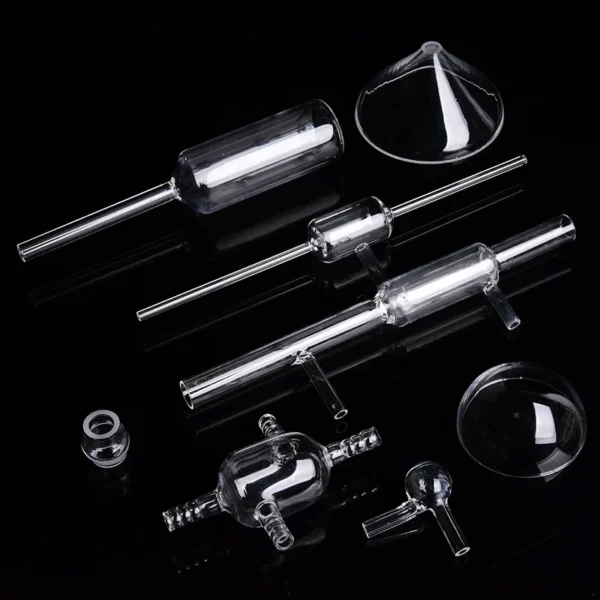
Custom shaped quartz fittings and lab apparatus produced by quartz flame forming fabrication
The Process of Flame Forming in Quartz Tube Fabrication
Flame forming is a crucial technique in the fabrication of quartz tubes, used extensively in various industrial applications due to quartz’s properties such as high thermal resistance and excellent optical clarity. This method involves applying targeted heat to the quartz material, facilitating manipulation of its shape and size to meet specific requirements.
The flame forming process begins with the selection of the appropriate quartz tube. Typically, manufacturers choose high-purity quartz to ensure optimal performance and durability. Once the tubing is selected, it is prepared for the flame forming process. This preparation may include cleaning the tube surface to remove any contaminants, which could interfere with the heating and shaping processes.
During the flame forming procedure, a specialized torch generates a high-temperature flame directed at the desired sections of the quartz tube. The heat from the flame causes the material to soften, allowing the technician to manipulate its form. Various techniques are employed in this stage; for instance, localized heating can be used to create bends or curves in the tube while maintaining structural integrity.
Tools used in the flame forming process typically include handheld torches with adjustable flame characteristics, as well as tools for measuring and monitoring the temperature of the quartz. Safety is paramount during this operation, necessitating the use of protective equipment such as heat-resistant gloves, eye protection, and proper ventilation to avoid inhaling any potentially harmful fumes.
As the quartz reaches the desired softness, skilled technicians can employ various techniques, like stretching or compressing, to achieve the required dimensions and shapes. This manipulation continues until the manufacturing specifications are met. Flame forming not only alters the tube’s geometry but can also aid in creating features such as flares and tapered ends, which are essential for the joining of components in assembly processes.
Examples of Products Made with Flame-Formed Quartz Tubes
Flame forming is a versatile technique that allows for the creation of a wide range of products crafted from quartz tubes. This process employs controlled heating to manipulate quartz, resulting in unique shapes and sizes that cater to various applications. Among the most notable products made through flame forming are custom fittings, which are essential in industries such as HVAC, automotive, and laboratory equipment manufacturing.
Custom fittings produced from flame-formed quartz tubes can be designed to meet specific requirements, ensuring optimal performance in complex systems. These fittings are often used in high-temperature applications, where traditional materials may fail to deliver the necessary durability. The precision of flame forming allows for tight tolerances, which is crucial in applications where leaks or faults can have serious consequences.
Moreover, flame forming is not limited to functional components. It also plays a significant role in the production of scientific apparatus. Laboratory equipment, such as specialized glassware for chemical experiments, benefits from the quality and clarity of quartz. Flame-formed quartz components, such as reaction vessels and sample containers, ensure that reactions take place in a controlled environment, while minimizing contamination and maximizing accuracy.
An engaging aspect of flame forming is its application in the realm of art. Artists and designers utilize flame-formed quartz tubes to create stunning sculptures and decorative pieces. The fluidity of flame-formed quartz allows for dynamic designs that capture light beautifully, enhancing any artistic installation. These creations not only showcase the artistic potential of quartz but also highlight the craftsmanship involved in flame forming techniques.
In summary, the products made from flame-formed quartz tubes are diverse and significant, ranging from crucial fittings and scientific apparatus to artistic expressions. The adaptability of flame forming demonstrates its importance across various industries, proving that the potential of quartz extends far beyond its basic applications.
The Advantages and Challenges of Custom Quartz Tube Fabrication
Custom quartz tube fabrication offers numerous benefits that make it an attractive option for various applications across multiple industries. One of the primary advantages is the precision that these fabricated tubes can achieve. The exacting nature of the fabrication process allows for tight tolerances, ensuring that the end product meets the specified dimensions required for intricate projects. This precision is critical, particularly in industries such as telecommunications and semiconductor manufacturing, where even minor deviations can result in significant performance issues.
Another notable benefit of custom quartz tube fabrication is the high level of customization available. Manufacturers can create tubes in a variety of shapes, sizes, and designs tailored to meet specific operational needs. This level of customization extends to the selection of material properties as well. Quartz, known for its thermal stability, chemical resistance, and optical clarity, becomes increasingly advantageous when customized to optimize performance for unique applications. Thus, businesses can leverage these capabilities to enhance their products, leading to improved functionality and reliability.
However, it is essential to acknowledge the challenges associated with custom quartz tube fabrication. One significant hurdle is the technical limitations inherent in the manufacturing process. Achieving the desired shape and size without compromising the structural integrity of the tube often requires advanced techniques and specialized equipment. This can make the setup more complex and may reduce production efficiency.
Cost factors also present a challenge in custom quartz tube fabrication. The advanced materials and technologies involved can lead to increased production costs, which might deter some businesses from pursuing custom solutions. While the long-term benefits often outweigh these costs, careful consideration is necessary to ensure that the investment aligns with the project’s budget and expected returns.
In conclusion, while custom quartz tube fabrication provides distinct advantages in terms of precision and customization, it is imperative to weigh these against the associated challenges, including technical limitations and cost considerations.