Understanding Thermal Processing Techniques
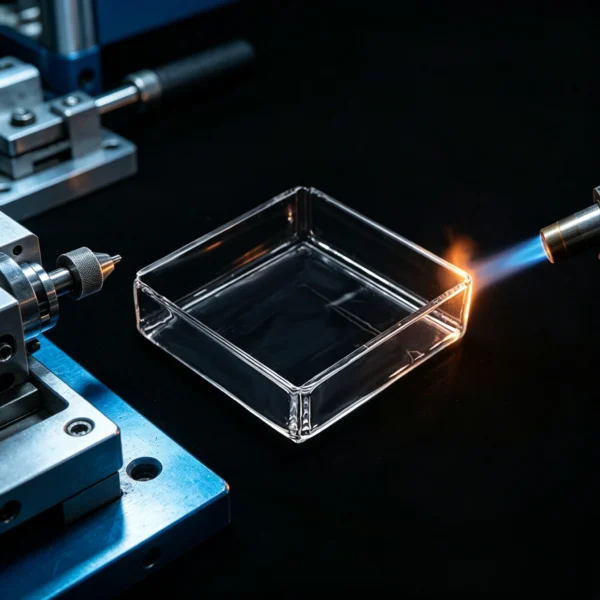
Thermal processing is a critical aspect of quartz fabrication, as it significantly influences the material’s properties, enhancing its suitability for high-performance applications. Various techniques such as annealing, melting, and reforming are employed to achieve the desired characteristics in quartz materials.
Annealing is a heating and cooling process that reduces internal stresses within quartz, promoting dimensional stability. By carefully controlling the temperature and rate of cooling, manufacturers can produce quartz components that resist deformation and maintain their structural integrity under varying operational conditions. This process is particularly beneficial for applications where precision is paramount, as it yields homogeneous materials with minimal defects.
Melting, on the other hand, involves reaching a temperature where the quartz transitions to a liquid state. This technique allows for the creation of complex shapes and forms that would be difficult to achieve through traditional machining methods. The melted quartz can be cast into molds to create intricate components, facilitating the production of customized parts for specific applications.
Reforming complements the melting process and entails the reshaping of quartz materials. By applying thermal energy, manufacturers can reconfigure existing quartz structures without losing their inherent qualities. This is particularly useful in recycling quartz waste or creating new components from previously used materials.
Incorporating thermal processing in quartz manufacturing not only enhances the material’s performance but also ensures consistent quality across components. The dimensional stability attained through these techniques is essential for applications that require tight tolerances and reliable performance over time. Ultimately, the strategic use of thermal processing technologies significantly contributes to the advancement of quartz fabrication, enabling the production of high-quality components suitable for a wide range of industries.
Overview of CNC Machining for Quartz Parts
CNC machining, short for computer numerical control machining, represents a revolutionary advancement in manufacturing processes, particularly in the field of quartz fabrication. This technology enables operators to precisely control machining tools through computer programming, offering significant advantages in terms of accuracy and repeatability. When applied to quartz, an inherently brittle material, CNC machining becomes especially crucial, as it allows for the intricate shaping and finishing of complex geometries with tight tolerances.
Various types of CNC machines are utilized in the machining of quartz parts, each designed to fulfill specific applications and precision requirements. Among these, CNC milling machines stand out as the most common, employing rotating cutting tools to remove material from quartz blocks. Similarly, CNC lathes are also used, wherein the quartz piece is rotated against cutting tools to achieve cylindrical shapes. Additionally, CNC routers are employed for machining larger quartz sheets, allowing for varied applications ranging from industrial components to intricate art pieces.
The effectiveness of CNC machining in shaping quartz relies heavily on several machining parameters, which must be adeptly managed to avoid material damage. Key factors include spindle speed, feed rate, and the choice of cutting tools. Spindle speed, which determines how quickly the tool rotates, must be optimized to ensure proper cutting without chipping the quartz. Meanwhile, the feed rate, defined as the speed at which the workpiece moves into the cutting tool, affects the surface finish and machining accuracy.
Moreover, the selection of appropriate tooling is vital in achieving desired outcomes. Diamond-coated tools are often preferred for quartz, given their hardness and durability, facilitating smoother cuts and extended tool life. In essence, CNC machining serves as a powerful method for the transformation of raw quartz materials into precisely engineered components, integral to various high-tech industries.
The Synergy Between Thermal Processing and CNC Machining
Integrating thermal processing and CNC machining is critical in the fabrication of complex quartz components. Thermal processing, which includes various techniques such as annealing, can significantly enhance the characteristics of quartz materials, making them more suitable for subsequent machining operations. By subjecting quartz to controlled heat treatment, manufacturers can alter the microscopic structure of the material, resulting in improved toughness and reduced brittleness. These changes are essential when preparing quartz for the precision required in CNC machining.
When thermal treatments are applied, they not only optimize the physical properties of quartz but also set the stage for more precise machining capabilities. The CNC machining process, which provides high levels of accuracy and repeatability, benefits from these enhanced properties. For instance, materials that have undergone appropriate thermal processing tend to exhibit reduced thermal stress during machining, which minimizes the risk of deformation or cracking.
The integration of thermal processing with CNC machining also plays a crucial role in waste reduction. Traditional methods often lead to significant material waste, especially when working with hard materials like quartz. However, by optimizing the material’s properties beforehand through thermal treatments, manufacturers can achieve smoother machining processes with fewer errors. This not only conserves resources but also minimizes production costs.
Furthermore, aligning thermal processing with CNC machining enhances overall production efficiency. By ensuring that the quartz is prepared adequately before CNC operations, manufacturers can achieve faster cycle times and reduce downtime linked to material failures. The synergistic relationship between these two processes is essential for the reliable production of complex quartz parts, ultimately leading to higher quality outcomes in various applications within industries such as electronics, optics, and aerospace.
Applications and Case Studies in Quartz Fabrication
The integration of thermal processing and CNC machining in quartz fabrication has proven essential across a diverse range of industries. This synergy not only enhances precision but also promotes innovation in the production of complex quartz components. Various case studies illustrate how organizations leverage these methods effectively.
In the electronics industry, one notable application involved the production of precision quartz components for frequency control devices. A leading manufacturer integrated CNC machining with thermal treatment to achieve highly accurate resonators. By adjusting thermal conditions, the manufacturer was able to manipulate the properties of quartz, which resulted in superior performance and stability. This case showcases the direct correlation between sophisticated machining techniques and enhanced product functionality.
Similarly, in the optics sector, firms have adopted this integrated approach to fabricate optical components such as lenses and prisms. A successful project involved a team that used thermal processing to enhance the clarity and durability of quartz optics. The subsequent CNC machining allowed for tight tolerances and complex geometries, resulting in high-performance optical systems for advanced imaging applications.
The aerospace industry also presents striking examples. A renowned aerospace manufacturer employed both thermal and CNC processes to create intricate components such as quartz windows for satellites. The thermal treatment enabled the team to achieve the necessary stiffness and temperature resistance, while CNC machining produced precise dimensions crucial for space applications. This illustrates not only the efficiency but also the innovation that comes from utilizing these interconnected techniques.
These case studies reflect a prevailing trend where industries utilize thermal processing and CNC machining synergistically to meet demanding specifications. As these technologies continue to advance, the pursuit of excellence in quartz fabrication appears poised for future expansions, leading to even more innovative solutions and high-value products.