Introduction to Quartz Evaporating Dishes
Quartz evaporating dishes are specialized vessels commonly utilized in laboratory environments, particularly suited for applications involving ashing and sample preparation. These dishes are favored for their inherent material properties, which provide a significant advantage over traditional glass or ceramic dishes. The composition of quartz – primarily silica – lends itself to high thermal stability, allowing it to withstand extreme temperatures without compromising structural integrity.
One of the unique features of quartz evaporating dishes is their exceptional resistance to chemical reactions. Unlike other materials, quartz does not react with most chemicals, making it an ideal choice for processes that involve reactive substances. This characteristic is particularly important in ashing procedures, where organic materials are incinerated, leaving behind inorganic ashes. Additionally, the non-reactive nature of quartz ensures that the purity of the sample is maintained, an essential factor in quantitative analyses.
In a laboratory setting, the versatility of quartz evaporating dishes comes into play across various sectors, including materials science, environmental analysis, and chemical research. They are particularly beneficial in the preparation of samples for spectroscopy and gravimetric measurements, where accuracy and precision are paramount. The ability to conduct high-temperature processes without introducing contaminants underscores the importance of quartz dishes in ensuring reliable experimental results. Similar high-purity vessels such as the quartz crucible are often used alongside evaporating dishes for related high-temperature work.
Moreover, their lightweight and durable design makes these quartz dishes easy to handle and store. Unlike heavier alternatives, quartz evaporating dishes can be easily controlled during experiments, minimizing the risk of accidents due to mishandling. The transparency of quartz also allows for visual monitoring of sample reactions, adding an additional layer of convenience for laboratory personnel.
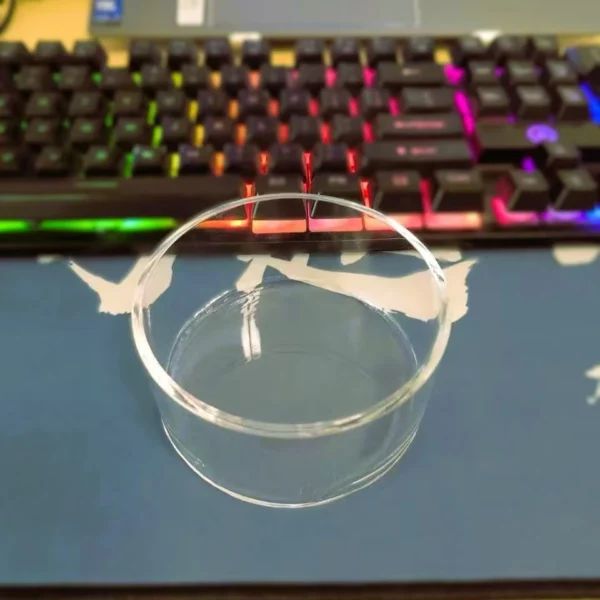
Matching quartz crucible and evaporating dish for laboratory high-temperature applications
Benefits of Using Quartz Evaporating Dishes
Quartz evaporating dishes have gained significant attention in laboratory settings, primarily due to their remarkable physical properties and versatility. One of the most prominent advantages is their ability to withstand extreme temperatures without deforming or deteriorating. Unlike traditional glass or ceramic dishes, quartz dishes can endure higher temperatures, making them ideal for applications that involve prolonged heating. This thermal stability is crucial when performing ashing procedures, where samples are subjected to high heat to eliminate organic matter, thereby ensuring that only inorganic residues remain.
Furthermore, the ease of cleaning quartz evaporating dishes is another advantage that contributes to their increasing use in laboratory environments. These dishes typically possess a non-porous surface, which prevents the absorption of contaminants and reduces the risk of cross-contamination between samples. The straightforward cleaning process not only saves time but also ensures that subsequent experiments yield reliable and reproducible results. Laboratories often require rigorous maintenance to uphold sample purity, and using quartz dishes can significantly streamline this aspect of sample preparation.
In terms of their impact on sample purity, quartz evaporating dishes are exceptionally beneficial. The inert nature of quartz means that it does not react with the chemicals during the ashing process. This characteristic is particularly essential when dealing with sensitive samples that demand a contamination-free environment. By utilizing quartz dishes, researchers can enhance the integrity of their samples, leading to improved analytical outcomes.
Overall, the combination of temperature resistance, ease of maintenance, and superior performance in preserving sample purity illustrates why quartz evaporating dishes are favored in modern laboratories. Their unique properties address many challenges faced by researchers, ultimately contributing to more accurate and dependable analytical results. When standard sizes do not meet specific requirements, custom products can be manufactured to exact specifications.
Application of Quartz Dishes in Ashing Procedures
Quartz evaporating dishes are integral to the ashing procedure, an essential method in the preparation and analysis of samples. The choice of materials in ashing is vital as it influences the purity and integrity of the final results. Quartz offers unique properties that set it apart from other materials such as porcelain and glass, particularly its ability to withstand high temperatures and resist chemical attack during the ashing process.
The ashing procedure typically begins with the selection of the sample, which is placed in the quartz evaporating dish. The dish is then heated in a controlled environment, often in a muffle furnace, where the organic components of the sample are burned off, leaving behind inorganic residues. This heating process requires precise temperature control; quartz dishes can endure the high temperatures needed for ashing without melting or breaking, which is a common issue with other materials.
Moreover, the use of quartz evaporating dishes minimizes contamination risks, ensuring that the residues derived from samples remain untainted. This cleanliness is critical since any contaminants could compromise subsequent analytical results. When samples are ashed using quartz, the recovery rate of the inorganic constituents is significantly improved, enhancing the accuracy of data interpretation. In many cases, a quartz crucible is used in conjunction with evaporating dishes for complete high-temperature sample processing.
Another advantage of quartz dishes in ashing procedures is their excellent thermal conductivity. This property allows for uniform heating, which is crucial for achieving consistent results across samples. Furthermore, they are relatively easy to clean and can be reused multiple times, making them cost-effective for laboratories aiming for efficiency without sacrificing quality.
In summary, quartz evaporating dishes play a crucial role in the ashing process due to their thermal resistance, purity, and reusability, which collectively improve the reliability of sample analysis and enhance the accuracy of scientific data derived from the ashing procedures.
Best Practices for Maintaining Quartz Evaporating Dishes
Quartz evaporating dishes are essential tools in laboratories where precise ashing and sample preparation are critical. To ensure their effectiveness and longevity, following best practices for maintenance is imperative. Proper handling begins with the awareness that these dishes are fragile and can be susceptible to thermal shock. Always handle the dishes with care and avoid any abrupt temperature changes that could lead to cracking.
Cleaning quartz evaporating dishes is a vital aspect of maintenance. After use, it is advisable to allow the dishes to cool to room temperature before cleaning them. A gentle wash using a soft sponge and mild detergent will suffice for removing residues. Avoid using abrasive cleaning materials, as these can scratch the surface of the quartz and impair its performance in future applications. If necessary, a dilute solution of hydrochloric or nitric acid can be employed to remove stubborn residues, ensuring the dishes are thoroughly rinsed afterward to eliminate any chemical traces.
Storage is another crucial factor in maintaining quartz evaporating dishes. Ideally, they should be stored in a protective cabinet or on a cushioned shelf where they are less likely to be exposed to collisions or falls. If multiple dishes are stacked, it is recommended to insert a clean, soft cloth between them to prevent scratches. Maintaining an organized storage system will not only help prevent damage but will also enhance lab efficiency.
To maximize the effectiveness of quartz evaporating dishes in laboratory settings, it is beneficial to keep them away from direct, prolonged exposure to intense light or heat sources. Regular inspections for any signs of wear or damage can also preemptively address potential issues. By adhering to these best practices—careful handling, proper cleaning, appropriate storage, and regular inspections—laboratories can ensure that their quartz evaporating dishes remain reliable and effective for an extended period. For non-standard dimensions or special designs, custom products are available upon request.