Introduction to Fused Quartz
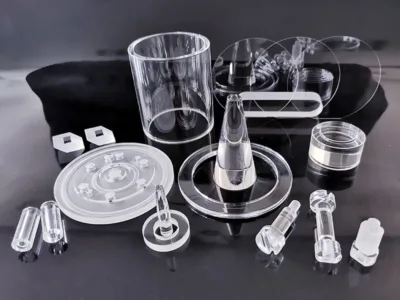
Fused quartz, also known as fused silica, is a high-purity form of silicon dioxide (SiO₂) that stands out due to its excellent optical properties and minimal contamination. Unlike natural quartz, which can be embedded with various impurities, fused quartz is produced via a high-temperature melting process, resulting in a material that is optically clear, thermally stable, and electrically insulating. These characteristics make it ideal for a variety of optical applications, from scientific research to industrial uses.
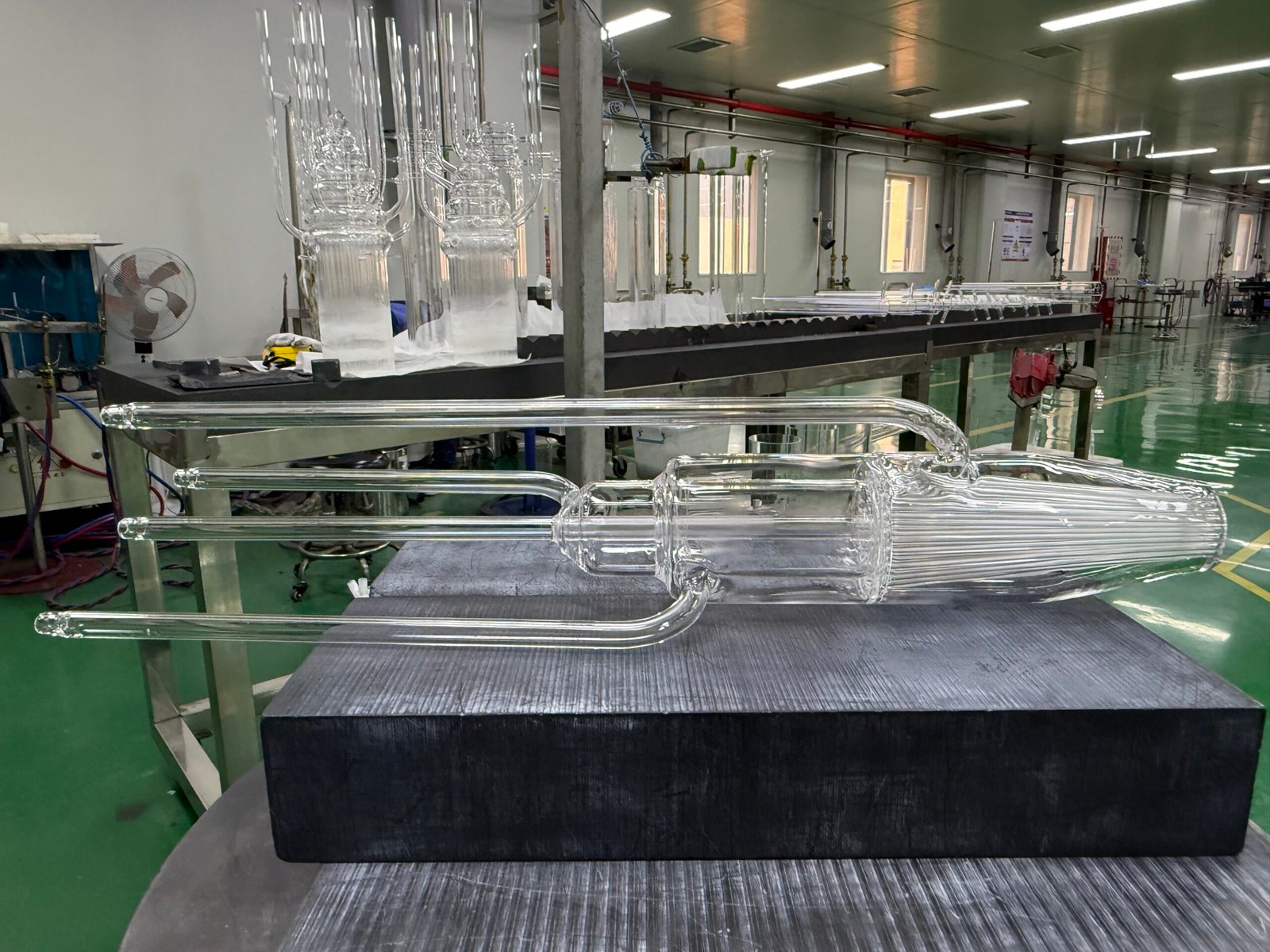
The manufacturing of fused quartz involves two main processes: electric arc melting and flame fusion. In electric arc melting, quartz sand is subjected to high-temperature arcs, forming a homogeneous quartz glass that is highly transparent. Flame fusion, on the other hand, uses a high-temperature flame to melt silica powder into a transparent glass. Both methods produce quartz with exceptional purity and clarity, essential for achieving optimal performance in optical systems.
One of the key attributes of high-purity fused silica optics is their low thermal expansion coefficient. This ensures that the material maintains dimensional stability even under varying temperature conditions, which is critical for precision optical applications. Additionally, fused quartz has remarkable UV and infrared (IR) transmission capabilities, making it suitable for a wide range of optical technologies.
Understanding Optical Properties
Optical properties refer to how materials interact with light, including phenomena such as absorption, reflection, and transmission. These properties are crucial for determining how materials perform in optical applications. The refractive index of fused quartz, for example, plays a major role in its ability to bend light as it enters the material. Fused quartz’s refractive index (1.4585 at 589 nm) remains consistent across the ultraviolet (UV) to infrared (IR) spectrum, making it an excellent choice for a variety of optical applications.
The material’s absorption characteristics are just as important. Fused quartz maintains minimal absorption in the deep UV (DUV) range, allowing it to transmit light efficiently without significant loss. This property makes it ideal for UV applications like sterilization and photolithography. Similarly, its IR grade variant ensures effective transmission of infrared light, which is essential in technologies like thermal imaging and spectroscopy.
Transmission Characteristics in the UV Spectrum
Fused quartz excels in UV transmission, with high-purity fused silica offering transmission rates over 90% in the UV-C range (200-280 nm). This makes it the material of choice for UV applications that require high optical clarity and minimal absorption. For example, DUV grade fused silica is designed to provide enhanced UV transmission, which is crucial in photolithography, UV sterilization, and quartz glass manufacturing.
Fused quartz’s UV transmission properties are further reinforced by its low absorption coefficients in the DUV region. This enables precision optical systems to maintain clarity and minimize light loss. The spectral transmission curve for quartz clearly demonstrates that fused quartz outperforms many other materials in transmitting UV light, particularly in the DUV range.
Additionally, the refractive index of fused quartz (1.46 at 589 nm) plays a role in minimizing reflection losses, which further enhances the material’s UV transmission efficiency. Engineers and scientists often choose fused quartz for UV applications because of its ability to deliver high transmission rates and optical reliability.
Transmission Characteristics in the Visible Spectrum
In the visible light spectrum (400–700 nm), fused quartz also demonstrates outstanding optical clarity. With its low impurity content and high purity, fused quartz achieves nearly total transmission of light, ensuring minimal loss of intensity. The refractive index remains around 1.46, allowing the material to bend and focus light with precision.
These optical characteristics make fused quartz ideal for use in lenses, prisms, and other optical components. Its exceptional transmission in the visible spectrum is also valuable in applications like infrared spectroscopy, where accurate measurement of light is critical.
Moreover, fused quartz is used in telecommunications for optical fibers, benefiting from its high UV and IR transmission. Its low absorption and scattering help maintain signal integrity over long distances, making it indispensable for high-performance optical communications.
Transmission Characteristics in the IR Spectrum
Fused quartz also exhibits exceptional transmission in the infrared (IR) spectrum, particularly in the range of 1.0 μm to 8.0 μm. This makes it ideal for thermal imaging, spectroscopy, and other IR applications that require precise light transmission. The refractive index of fused quartz remains stable across IR wavelengths, minimizing absorption losses and ensuring efficient transmission of infrared light.
The deep UV (DUV) grade fused silica has been engineered to perform well in both the UV and IR spectra, while IR grade fused quartz is specifically optimized for infrared transmission. This versatility makes fused quartz ideal for various optical systems that require reliable performance across the UV-IR spectrum.
Factors Influencing Optical Transmission
Several factors influence the optical transmission characteristics of fused quartz. The thickness of the material plays a crucial role in determining how much light is absorbed or scattered as it passes through. Thicker pieces of fused quartz may experience higher absorption, which can reduce the material’s overall transmission efficiency, especially in the UV and IR ranges.
The angle of incidence at which light interacts with the quartz surface also affects its transmission. The refractive index of fused quartz can vary with the angle of light, impacting how much light is transmitted. For optimal performance, especially in specialized optical applications, maintaining a consistent angle of incidence is essential.
Surface imperfections, such as scratches or dust, can reduce transmission efficiency by scattering light. Coatings and treatments can be applied to minimize these imperfections, enhancing the material’s optical properties and ensuring high performance in UV and IR applications.
Comparative Analysis with Other Optical Materials
Fused quartz is often compared to other optical materials such as borosilicate glass and sapphire. When it comes to UV transmission, fused quartz outperforms both borosilicate glass and soda-lime glass. While borosilicate glass is known for its thermal stability, it does not match the UV transmission efficiency of fused quartz, making the latter more suitable for UV applications that demand high optical clarity.
In the IR range, fused quartz also demonstrates superior transmission capabilities compared to both borosilicate and soda-lime glass. Its low coefficient of thermal expansion and minimal optical distortion under temperature stress give it an edge in precision optics, where maintaining the integrity of the optical path is critical.
Applications of Fused Quartz in Optics
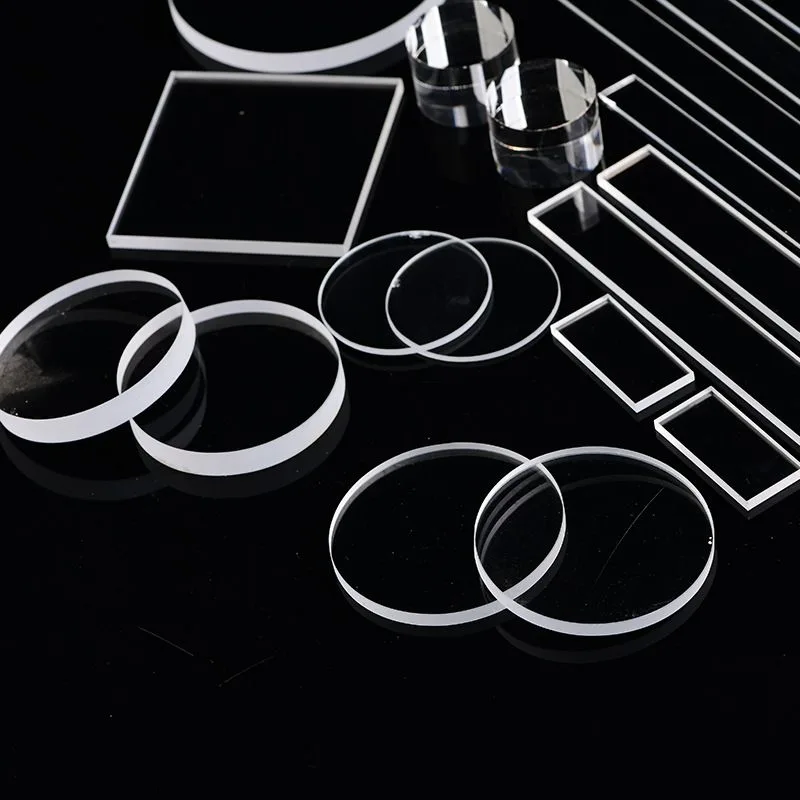
Fused quartz is used in a wide range of optical applications due to its superior transmission characteristics across the UV to IR spectrum. In telecommunications, fused quartz is a crucial component in optical fibers, where its UV and IR transmission properties ensure minimal signal loss and high performance. Similarly, in aerospace, optical components made from fused quartz, such as lenses and windows, are used in satellite systems, where they provide clear, reliable performance under varying environmental conditions.
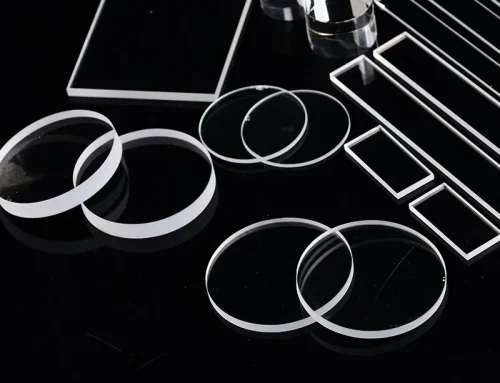
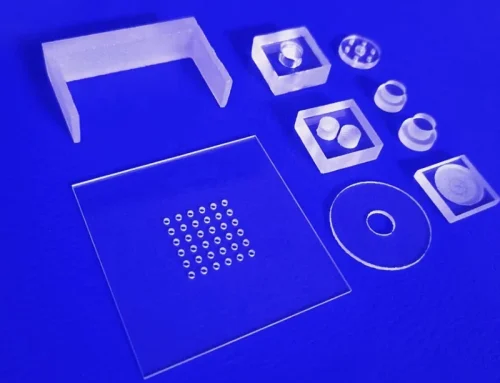
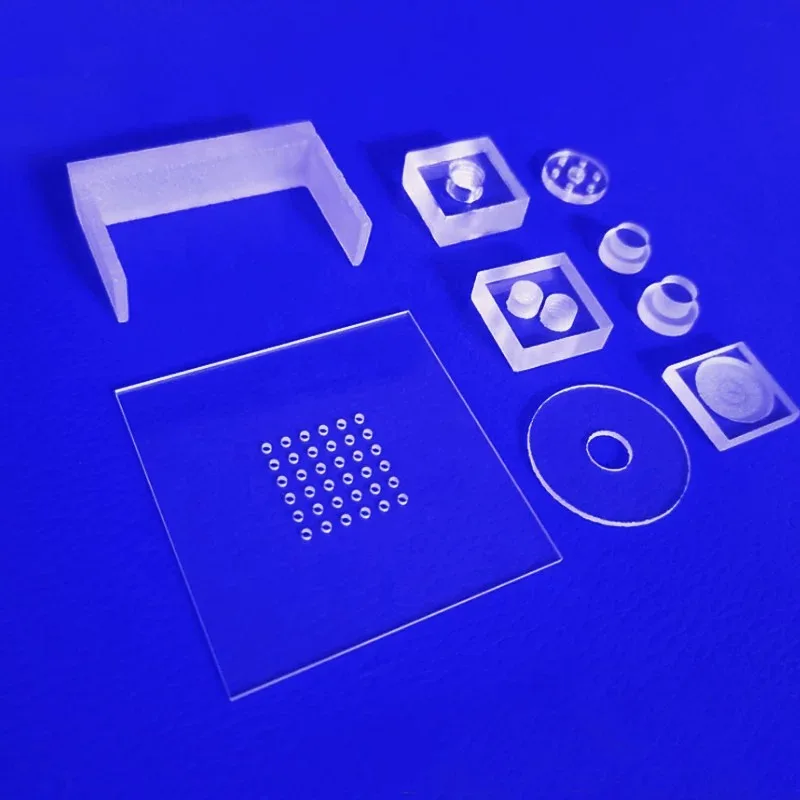
In scientific research, fused quartz is used in spectroscopic equipment, cuvettes, and other optical devices, where its ability to transmit light with minimal distortion is essential for accurate data collection. The material’s versatility is further enhanced by specialized grades, such as DUV and IR grade fused quartz, which cater to applications at the extreme ends of the UV and IR spectra.
Conclusion and Future Outlook
Fused quartz remains one of the best materials for high-performance optical applications due to its excellent UV and IR transmission characteristics. The material’s ability to maintain high transmission efficiency across a broad spectrum of light wavelengths, combined with its low thermal expansion and minimal optical distortion, makes it indispensable in a wide range of industries, from telecommunications to aerospace.
As research and manufacturing techniques continue to advance, fused quartz is likely to see even greater developments, leading to improved transmission properties and new applications in emerging optical technologies. With its outstanding performance in UV and IR ranges, fused quartz will continue to play a pivotal role in advancing optical systems and technologies.