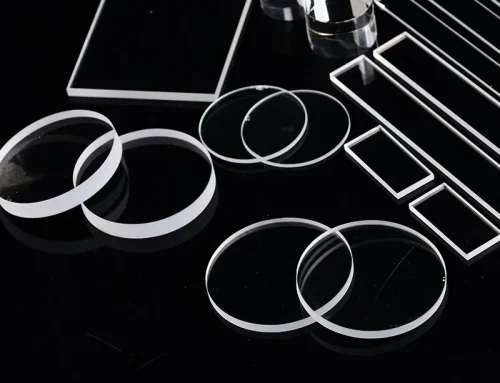
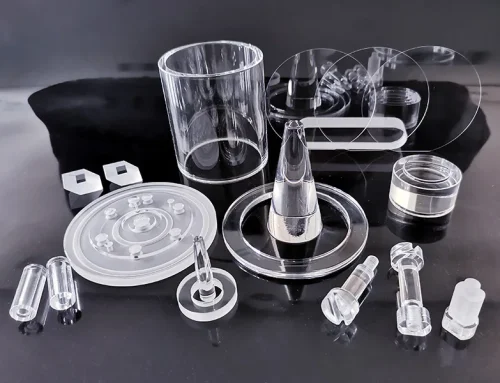
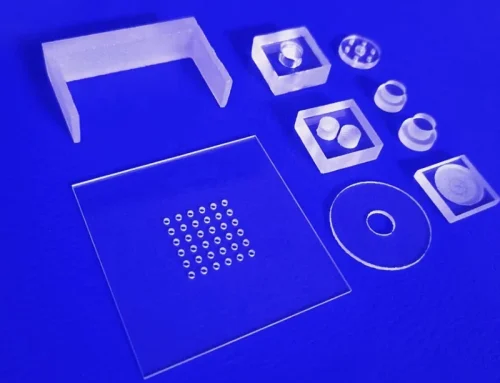
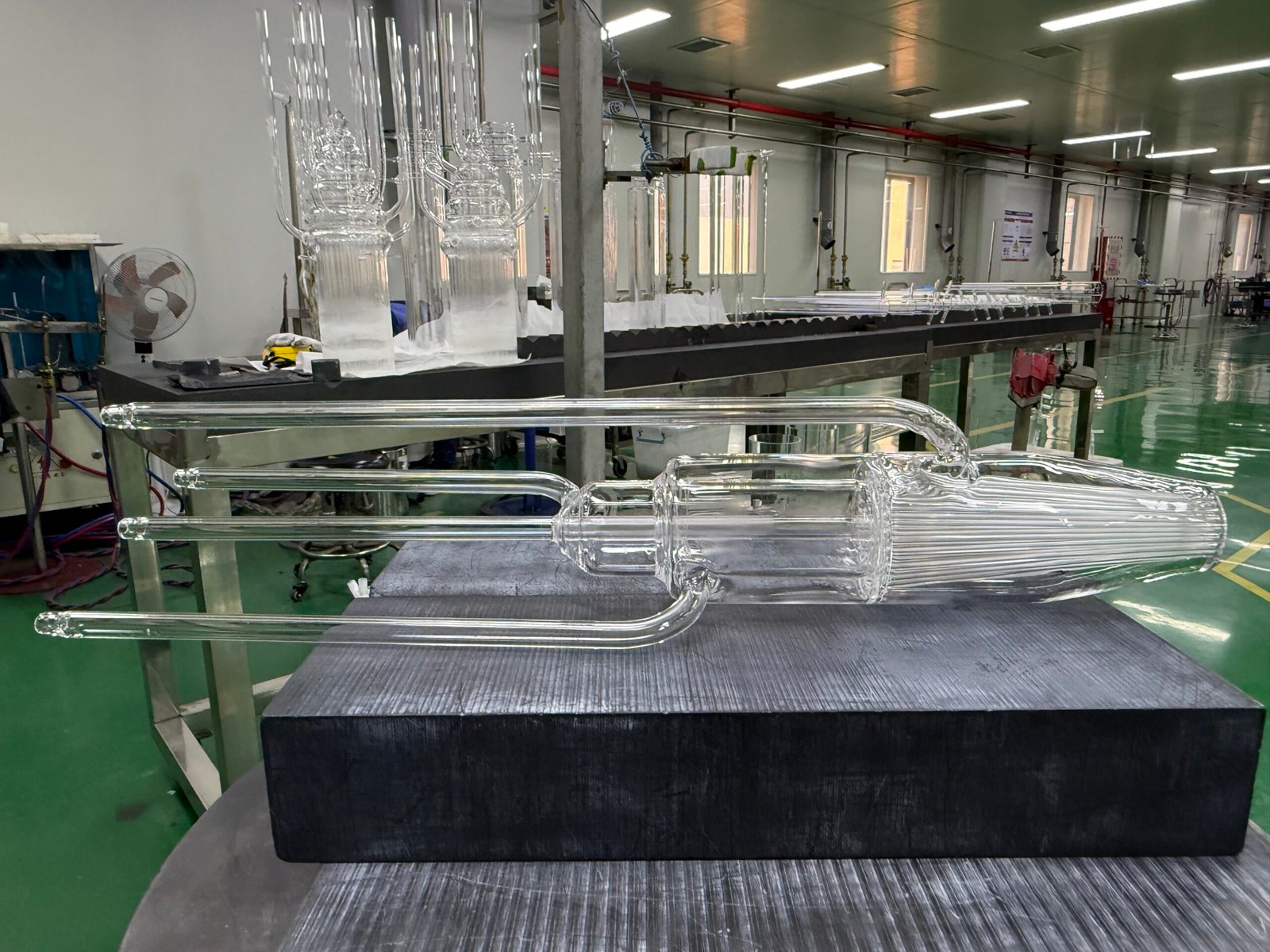
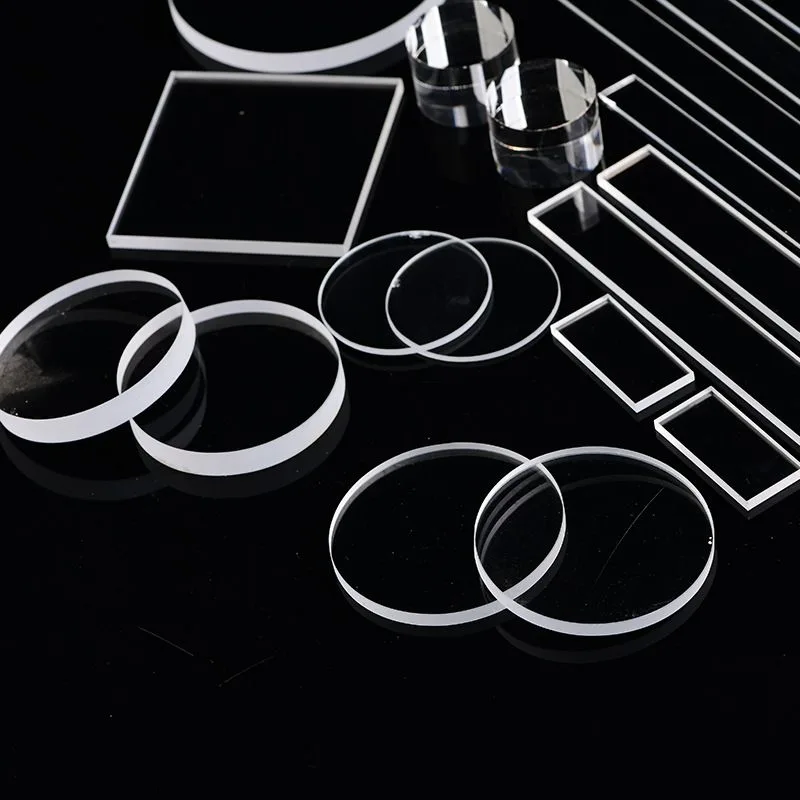
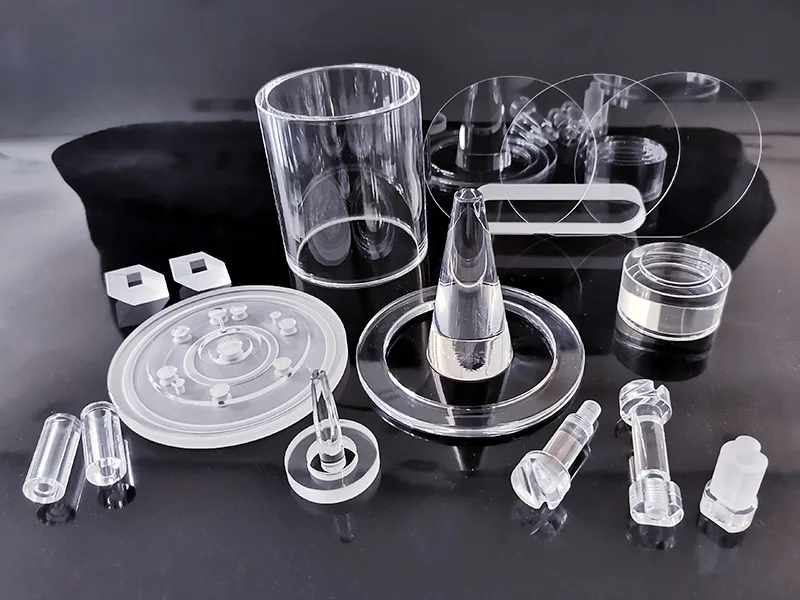
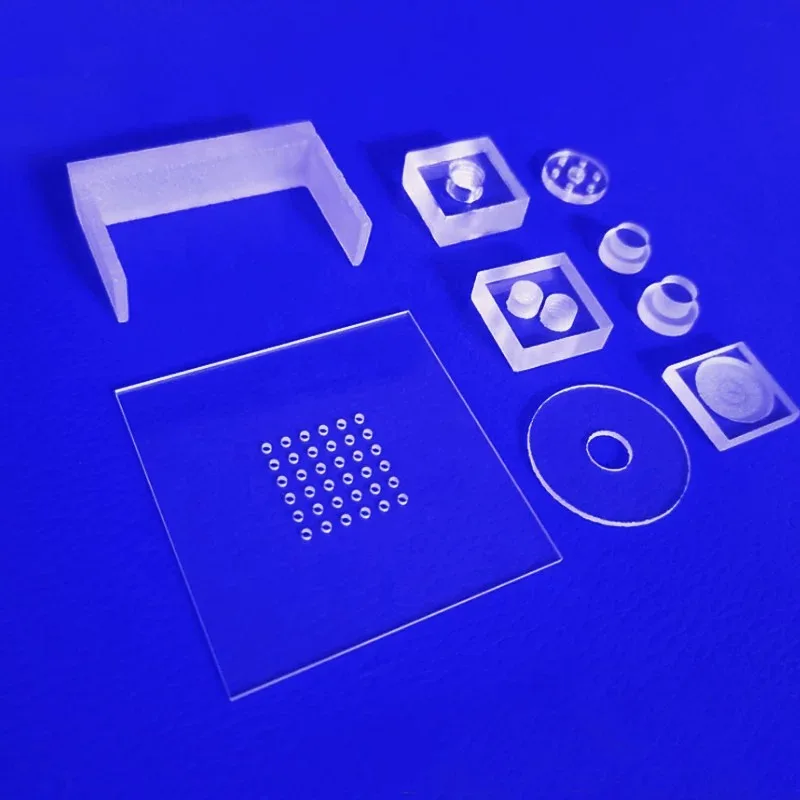
Custom fused silica parts are high-purity fused silica components — tubes, rods, plates, and complex shapes — manufactured and finished to your exact dimensions and specifications. For critical uses (semiconductor diffusion furnaces, optical windows, high-temperature vacuum systems), prioritize material purity (SiO₂ concentration), OH content, thermal expansion, surface finish, and vendor process controls when selecting a supplier.
If you are a purchaser, process engineer, or optical designer, this guide explains exactly what to check, how to compare options, and how to avoid common pitfalls when ordering custom fused silica parts in 2025.
What Are Custom Fused Silica Parts?
Definition
Custom fused silica parts are precision-manufactured components made from fused silica (high-purity SiO₂) tailored to customer specifications. Typical items include:
- Fused silica tubes (quartz tubes)
- Fused silica rods and bars
- Fused silica plates and optical windows
- Complex, CNC-machined or laser-cut fused silica shapes
Primary advantages
- Excellent thermal stability and low coefficient of thermal expansion
- High transparency across UV–VIS–IR bands
- Strong chemical resistance and electrical insulation
Key Technical Parameters You Must Check
Material & purity
SiO₂ purity and impurity profile strongly influence performance. Ask for SiO₂ percentage and trace element analysis.
OH content
Hydroxyl (OH) content affects IR transparency and high-temperature behavior. For many optical or IR-critical uses, lower OH is desirable.
Thermal properties & mechanical strength
Check the coefficient of thermal expansion, thermal shock resistance, and mechanical strength ratings relevant to your process temperature cycles.
Quick Parameter Comparison
| Parameter | Typical Range / Target | Why it matters |
|---|---|---|
| SiO₂ purity | ≥ 99.9% (often 99.99% for critical optics) | Reduces metallic contamination and ionic leaching |
| OH content | ppm-level; lower for IR/EUV uses | Affects IR absorption and thermal stability |
| Thermal expansion | ≈ 0.5–0.6 ×10⁻⁶ /K | Low expansion reduces thermal stress and cracking |
| Surface roughness | Ra ≤ 0.1–1 µm (application dependent) | Critical for optical windows and high-transmission parts |
Manufacturing Processes & Post-processing
Common forming methods
- Electric or gas-fired melting followed by drawing or pressing
- Flame-fed consolidation for tubes and rods
- CVD (chemical vapor deposition) for ultra-high-purity layers
Key post-processing
- CNC grinding and precision machining for tight tolerances
- Flame polishing or mechanical polishing for optical surfaces
- High-temperature annealing (stress relief) and dehydration/degassing to reduce OH
Process vs. Typical Outcome Table
| Process | Typical Benefit | Best Use |
|---|---|---|
| CVD silica | Lowest OH, highest purity | Critical optics, EUV, fiber preforms |
| Electric-melted fused silica | High purity, cost-effective | Tubes, rods, general-purpose optical parts |
| Flame polishing | Improved surface smoothness | Optical windows, labware |
Step-by-Step Selection Workflow
Step 1 — Define application constraints
Specify operating temperature range, vacuum or ambient, chemical exposure, and acceptable optical bands (UV/VIS/IR).
Step 2 — Prioritize parameters
Rank importance: purity, OH, surface figure, dimensional tolerance, or cost.
Step 3 — Validate with sample tests
Order prototype samples for thermal cycling, transmission, and mechanical testing before committing to production runs.
Practical Vendor Checklist — What to Ask
- Can you provide material analysis: SiO₂ content and trace element report?
- What is the measured OH content (ppm) and method used?
- What are achievable tolerances, surface finish, and flatness for plates/windows?
- Which machining and polishing methods will be used for my part?
- Do you perform annealing / dehydration steps for stress relief and OH reduction?
Major Pitfalls and How to Avoid Them
Pitfall: Insufficient specification of surface finish
Consequence: Optical loss or inability to achieve focal/beam quality. Avoidance: Specify Ra, scratch-dig, and flatness by application.
Pitfall: Ignoring OH content
Consequence: Unexpected IR absorption or devitrification at high temperatures. Avoidance: Specify OH target and request measurement.
Pitfall: Skipping prototype validation
Consequence: Batch failures and assembly issues. Avoidance: Order small prototype runs and perform real-process testing.
Typical Applications for Custom Fused Silica Parts
Semiconductor processing
Tubes, boats, and fixtures in diffusion and oxidation furnaces where contamination control and thermal stability are essential.
Optics & lasers
High-transmission windows, UV optics, and laser beam delivery components.
High-temperature laboratory and vacuum systems
Structural rods, feedthroughs, and sight windows that must tolerate cycling and maintain low outgassing.
FAQ
Q1: What is a practical minimum order quantity for custom parts?
A: Many experienced manufacturers can support single-piece prototypes. For volume production, MOQ depends on complexity and process setup.
Q2: How is OH content measured?
A: Common methods include FTIR spectroscopy. Ask vendors for the measurement method and the actual spectra or readings.
Q3: Can I provide CAD or STEP files for quoting?
A: Yes — supplying precise 2D/3D files significantly speeds up feasibility assessment and quoting.
Q4: Which finishing improves optical transmission most?
A: High-quality mechanical polishing and antireflection coatings deliver the best transmission for windows and plates.
Q5: How do I reduce risk of thermal cracking?
A: Specify low thermal expansion materials, ensure proper annealing, and design gradual thermal ramp rates in your process.
Pre-Order Checklist (Quick)
- List exact dimensions and tolerances; attach CAD where possible.
- State operational environment: temperatures, vacuum level, chemicals.
- Define required optical specs: wavelength bands, transmission targets.
- Request material analysis (SiO₂, trace metals, OH levels).
- Ask for prototype/sample production and testing plan.
Closing Summary
When you choose custom fused silica parts, your decisions on material purity, OH content, surface finish, and vendor processing define final performance. Use a staged approach: clarify requirements, request specific material data, validate prototypes under real conditions, and then scale production. That approach minimizes risk and optimizes cost-performance for tubes, rods, plates, and complex fused silica components.
Want tailored guidance? Contact our technical team with your drawings and process conditions to get a focused feasibility assessment and sample plan.