Quartz glass—also called fused quartz or fused silica—is one of the most important high-temperature materials used in modern semiconductor manufacturing, optical engineering, laboratory equipment, photovoltaic production, and industrial furnace systems. Because it offers exceptional purity, thermal stability, and chemical resistance, engineers and researchers rely on quartz glass whenever a process involves extreme temperatures, rapid heating, aggressive chemicals, ultraviolet radiation, or severe thermal cycling.
One of the key performance indicators of quartz glass is its melting behavior, or more precisely, its softening behavior at high temperature. Unlike crystalline materials, quartz glass does not have a sharp single-point melting transition. Instead, its viscosity slowly changes across a wide temperature range. Understanding this viscosity-temperature relationship is essential for selecting the correct quartz grade, ensuring safety during high-temperature operations, and planning manufacturing processes such as blowing, forming, sealing, drawing, bending, annealing, machining, or welding.
1. What Is Quartz Glass?
Quartz glass is an extremely high-purity, amorphous SiO₂ material produced by melting natural quartz sand or synthetic silica under controlled high-temperature processes. Unlike common industrial glasses—such as soda-lime glass or borosilicate glass—quartz glass contains no additives, no stabilizers, and almost no metallic impurities. Most FGQuartz products are >99.99% SiO₂, ensuring consistent performance in environments that require exceptional stability.
Quartz glass is widely used in:
- semiconductor furnace tubes
- diffusion and CVD system components
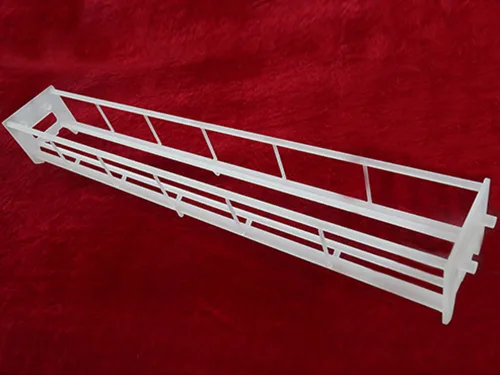
- quartz boats and carriers
- laboratory crucibles and beakers
- quartz reaction chambers
- UV and vacuum UV optical components
- high-temperature sight windows
- laser, sensing, and photonics elements
- photovoltaic ingot processing
- industrial heating tubes and protection tubes
FGQuartz supports custom manufacturing, including:
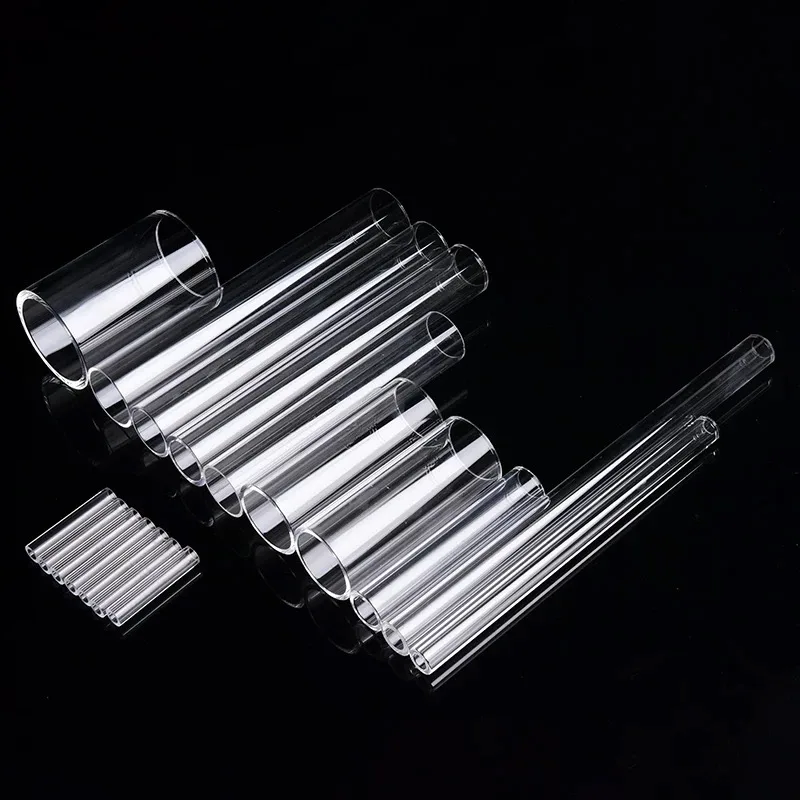
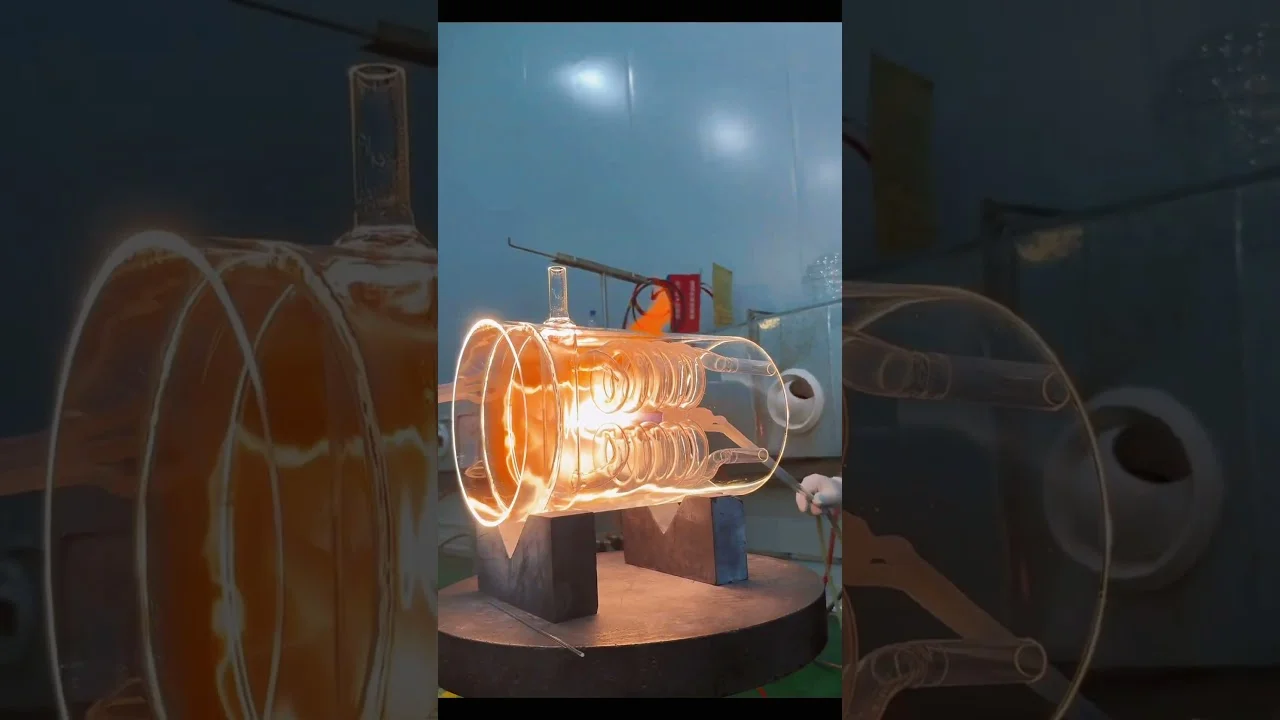
- quartz tubes(large diameter / thick wall / drawn tube / square tubes)
- quartz rods and solid bars
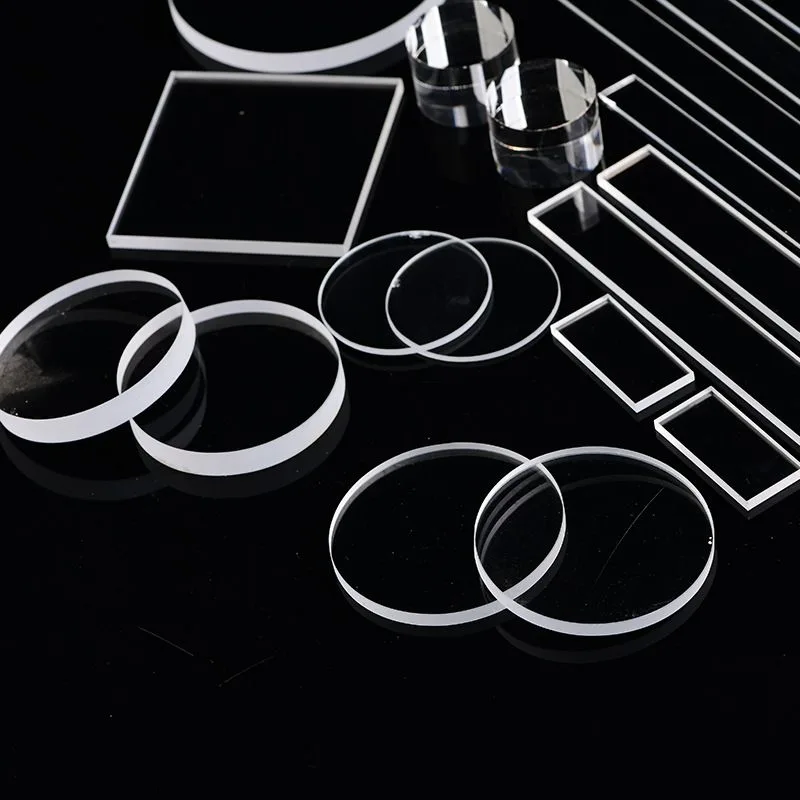
- quartz plates and discs
- quartz crucibles
- quartz reaction kettles
- quartz flanges
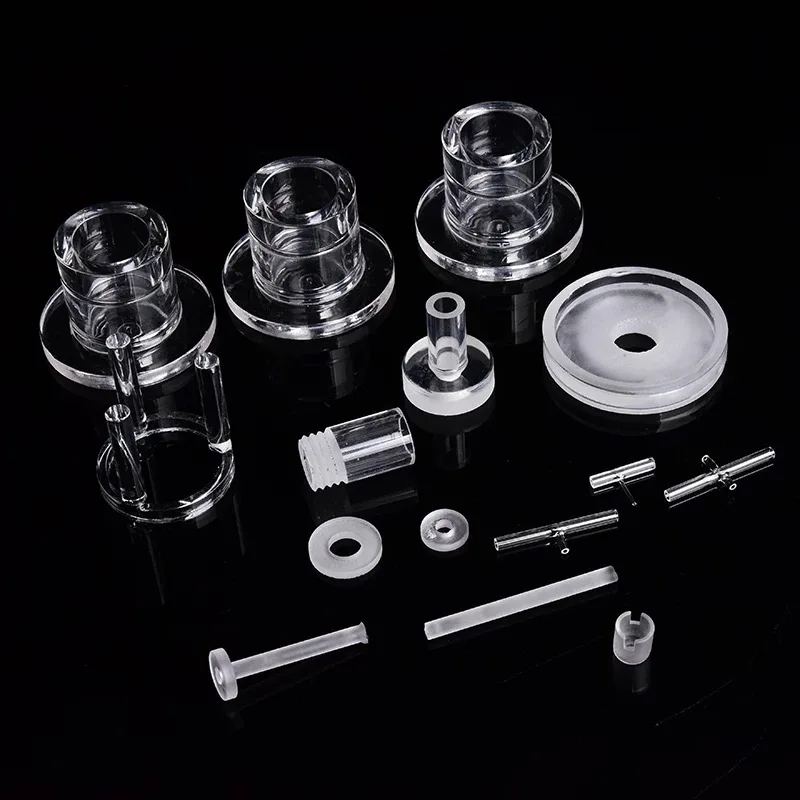
- laboratory quartz instruments
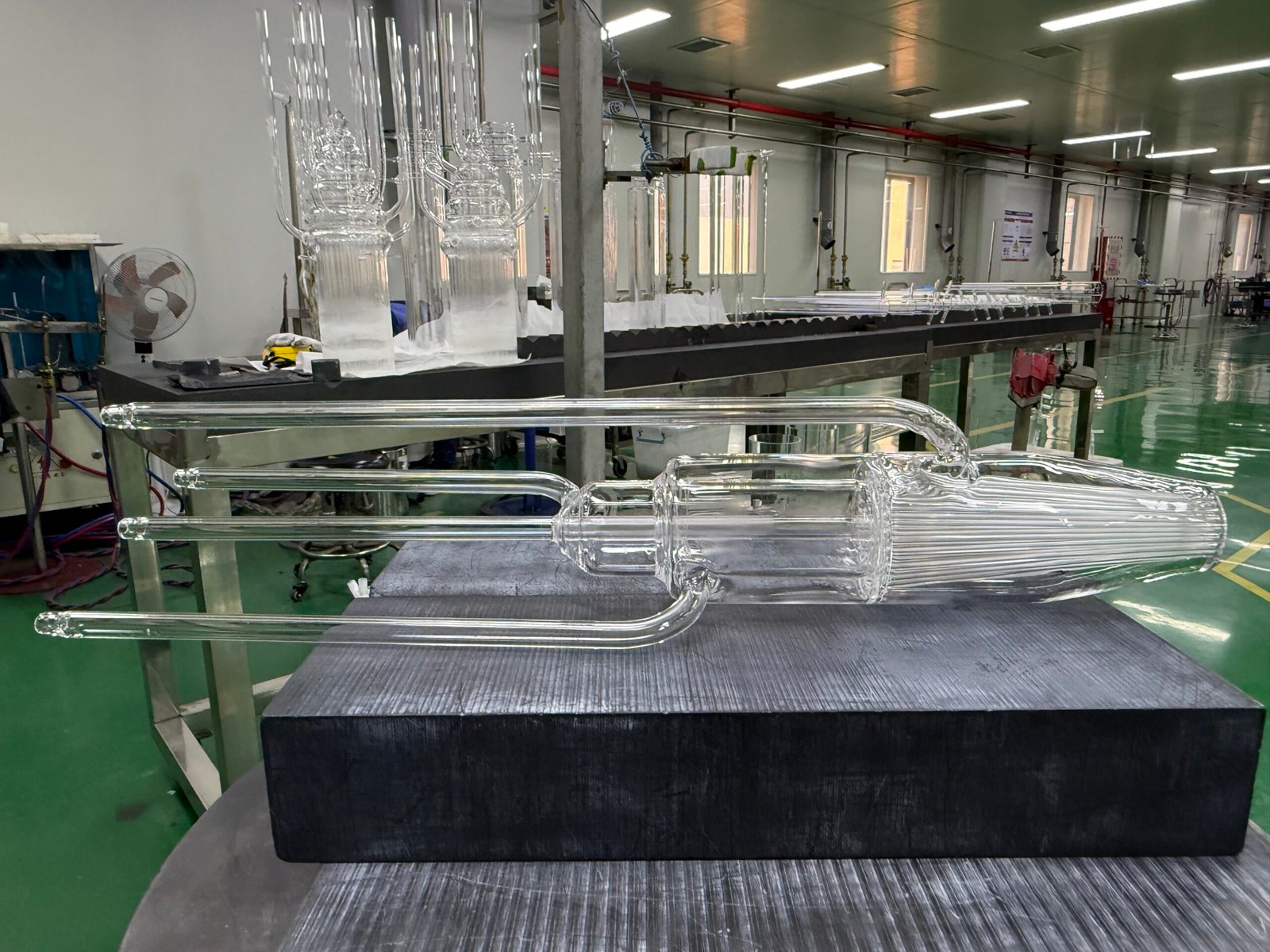
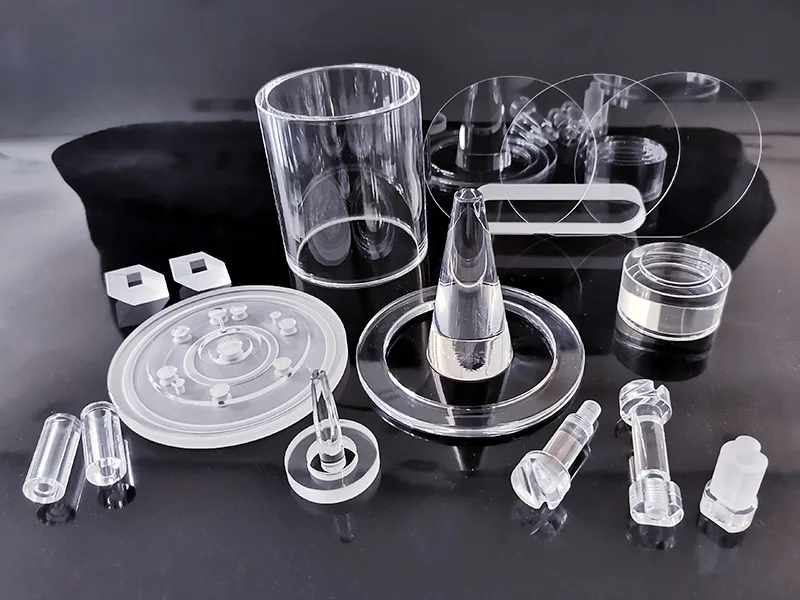
- special-shaped quartz components
2. Why Quartz Glass Does Not Have a True “Melting Point”
Quartz glass is amorphous, meaning its internal structure lacks long-range order. Therefore:
- It does not exhibit crystal-like melting at a single temperature.
- It softens gradually as temperature increases.
- Viscosity decreases continuously across a wide temperature range.
In practical engineering, quartz manufacturers, including FGQuartz, use standardized “viscosity reference temperatures” instead of a single melting point. These viscosity points determine how the material behaves during heating, processing, or forming.
The most important reference points include:
- Strain Point
- Annealing Point
- Softening Point
- Working Range / Working Point
- Flow Point
3. Quartz Glass Viscosity Reference Points
| Temperature Term | Approx. Temperature Range (°C) | Description & Practical Use |
|---|---|---|
| Strain Point | 950–1100°C | Below this temperature, internal stress does not grow. |
| Annealing Point | 1050–1180°C | Heating to this range allows stress relief after machining or forming. |
| Softening Point | 1650–1700°C | Quartz begins to deform under its own weight; a key parameter for FGQuartz tubes, rods, and plates. |
| Working Range | 1750–1950°C | Quartz can be drawn, blown, formed, welded, or shaped. |
| Flow Point | >2000°C | Material becomes fully fluid-like. |
➡ FGQuartz products typically have a softening point between 1650–1700°C depending on purity and manufacturing method.
4. Factors Affecting the Softening Temperature of FGQuartz Quartz Glass
Although all fused quartz shares similar thermal behavior, each manufacturer produces different grades depending on raw materials, melting equipment, atmosphere, and quality control. FGQuartz products follow high-purity guidelines, but variations still exist due to the nature of silica and processing.
4.1 Raw Material Purity
Higher SiO₂ purity results in:
- higher softening temperature
- improved thermal stability
- better UV transmission
- lower devitrification tendency
FGQuartz uses high-purity quartz sand or synthetic silica, ensuring stable softening points near the upper limit of the typical quartz range.
4.2 Manufacturing Process
Different fusion processes lead to different thermal behaviors:
- Electric fusion
Produces low-bubble, high-purity quartz commonly used for semiconductor and optical applications. - Flame fusion
Produces cost-efficient quartz tubes and rods with excellent thermal shock resistance.
4.3 OH Content (Hydroxyl Level)
Hydroxyl content affects viscosity:
- Higher OH content → slightly lower softening temperature
- Lower OH content → higher softening temperature
FGQuartz products generally maintain a stable OH level suitable for high-temperature applications such as furnace tubes and heaters.
4.4 Structural Uniformity and Optical Homogeneity
Better homogeneity ensures:
- lower thermal stress
- better resistance to deformation
- more consistent behavior during high-temperature heating
Quartz glass with lower bubble content and fewer microscopic defects maintains a more stable softening point.
5. Quartz Glass Compared to Other Glass Types
Quartz glass is unique among industrial glass materials. For engineers choosing between quartz, borosilicate, aluminosilicate, or soda-lime glass, understanding the thermal differences is essential.
| Glass Type | Main Composition | Softening Behavior / Temperatures | Typical Application |
|---|---|---|---|
| Fused Quartz (FGQuartz) | >99.99% SiO₂ | Softening point ~1650–1700°C | Semiconductor, optics, high-temperature furnaces |
| Borosilicate Glass | SiO₂ + B₂O₃ | Medium-temperature | Laboratory ware, cookware |
| Aluminosilicate Glass | SiO₂ + Al₂O₃ | Medium-high temperature | Mobile device screens |
| Soda-Lime Glass | SiO₂ + Na₂O | Low-temperature | Windows, bottles |
➡ Quartz is irreplaceable in high-temperature and high-purity environments.
6. High-Temperature Applications of FGQuartz Quartz Glass
Quartz glass’s ability to withstand heating, cooling, thermal shock, vacuum environments, chemical exposure, and optical energy makes it ideal for numerous industries.
6.1 Semiconductor & Electronics Industry
Quartz furnace tubes, CVD chambers, carriers, and wafer processing components must operate:
- at 900–1200°C continuously
- with rapid thermal cycling
- in corrosive or plasma-rich atmospheres
FGQuartz materials are suitable for:
- diffusion furnace tubes
- quartz boats
- liners and holders
- process tubes
- high-temperature insulators
6.2 Optical, UV, and Laser Applications
Quartz’s transmission from UV to IR supports:
- UV lamp envelopes
- excimer laser windows
- optical viewports
- spectroscopic instruments
High-temperature stability ensures accuracy under intense radiation.
6.3 Laboratory & Chemical Equipment
FGQuartz manufactures:
- reaction flasks
- quartz beakers
- high-temperature sight glasses
- distillation tubes
- crucibles
These components maintain clarity and stability even after long exposure to acids, alkalis, and high heat.
6.4 Photovoltaic (Solar) Manufacturing
Quartz is essential for:
- polysilicon ingot furnaces
- quartz crucibles
- high-temperature shielding components
- hydrogen production reactors
Its purity prevents contamination during silicon melting.
6.5 Industrial Heating & High-Temperature Tubes
Quartz tubes are widely used in:
- infrared heating elements
- high-temperature protective sleeves
- electric heating furnaces
- gas heater tubes
Their softening temperature ensures long service life under extreme conditions.
7. Thermal Shock Resistance and Stability
Quartz glass has an extremely low thermal expansion coefficient, allowing it to withstand:
- rapid heating
- rapid cooling
- large temperature differences
This makes it superior to most other glass materials, which would crack or shatter under similar conditions.
FGQuartz products maintain structural stability even during:
- sudden heating to several hundred degrees
- direct flame exposure
- instantaneous removal from heat sources
8. Mechanical Behavior at High Temperature
Quartz glass retains mechanical strength better than most glass types at elevated temperatures. However, as temperature approaches the softening range:
- viscosity decreases
- surface tension changes
- the material begins to slump under gravity
- deformation becomes possible
Understanding these transitions helps engineers design:
- high-temperature support frames
- mounting structures
- heating system layouts
- safe operating limits
9. Devitrification Considerations
At extended high-temperature exposure, quartz glass may locally devitrify (crystallize). Factors influencing devitrification include:
- surface contamination
- metallic dust
- alkali exposure
- extremely long residence at elevated temperatures
FGQuartz products minimize devitrification risk due to:
- high raw-material purity
- controlled processing
- smooth surface finishes
- stable microstructure
10. Design Considerations When Selecting Quartz for High-Temperature Processes
When choosing a quartz component for a furnace, reactor, or optical system, engineers should evaluate:
- Operating temperature
(continuous, peak, and emergency levels) - Heating and cooling rates
- Thermal shock requirements
- Mechanical support conditions
- Atmosphere type
(air, vacuum, O₂, H₂, inert gases) - Chemical environment
- Product form
(tubes, rods, plates, custom structures)
FGQuartz supports custom fabrication to ensure optimal performance in all environments.
11. FAQ: Quartz Glass Melting & Softening
Does quartz glass melt?
Quartz glass does not melt at a single point; it gradually softens between 1650–1700°C.
What is the softening point of quartz glass?
FGQuartz products typically soften at 1650–1700°C.
Why is quartz used in high-temperature furnaces?
Its thermal stability, purity, and low expansion make it ideal for 900–1200°C continuous operation.
Can quartz glass withstand thermal shock?
Yes. Quartz has excellent thermal shock resistance due to its near-zero thermal expansion.
Is fused silica the same as fused quartz?
Both are forms of high-purity amorphous SiO₂. Differences mainly lie in raw materials and manufacturing processes.
Can quartz glass be used in vacuum or corrosive environments?
Yes. Quartz is stable in vacuum, high-temperature industrial atmospheres, and most chemicals except HF.
12. Conclusion
Quartz glass is one of the most important high-temperature materials used in advanced technology. Its softening temperature—1650–1700°C for most FGQuartz products—makes it suitable for semiconductor processing, optics, photonics, laboratory research, industrial heating, and photovoltaic production. By understanding the viscosity-temperature relationship, stress behavior, thermal shock stability, and material purity, engineers can safely select and use quartz components in the most demanding environments.
FGQuartz continues to supply high-purity quartz tubes, rods, plates, crucibles, and customized quartz components for customers worldwide. For inquiries or custom projects: